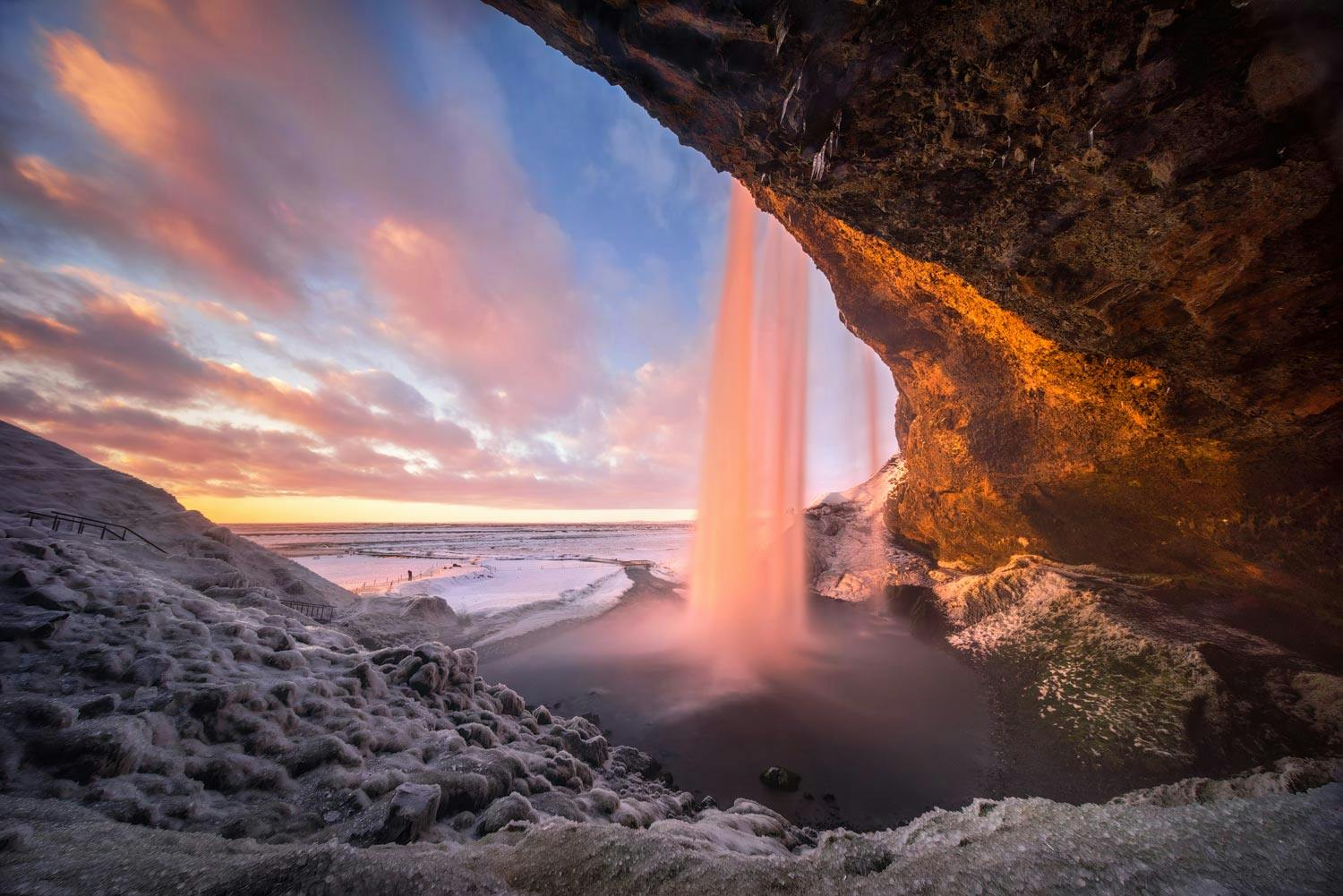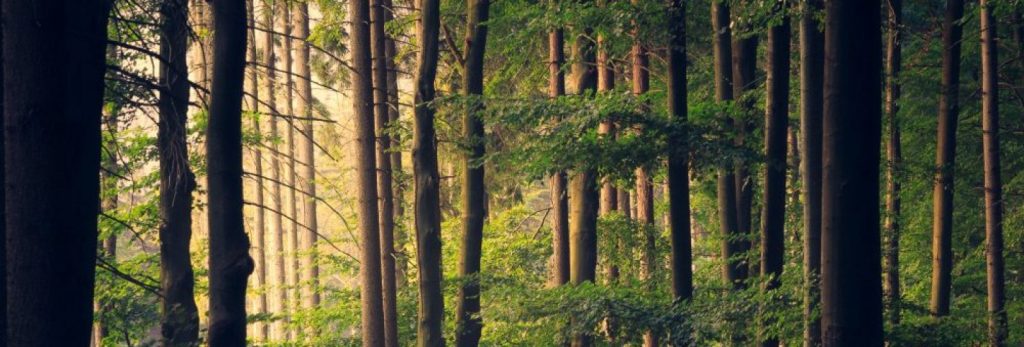
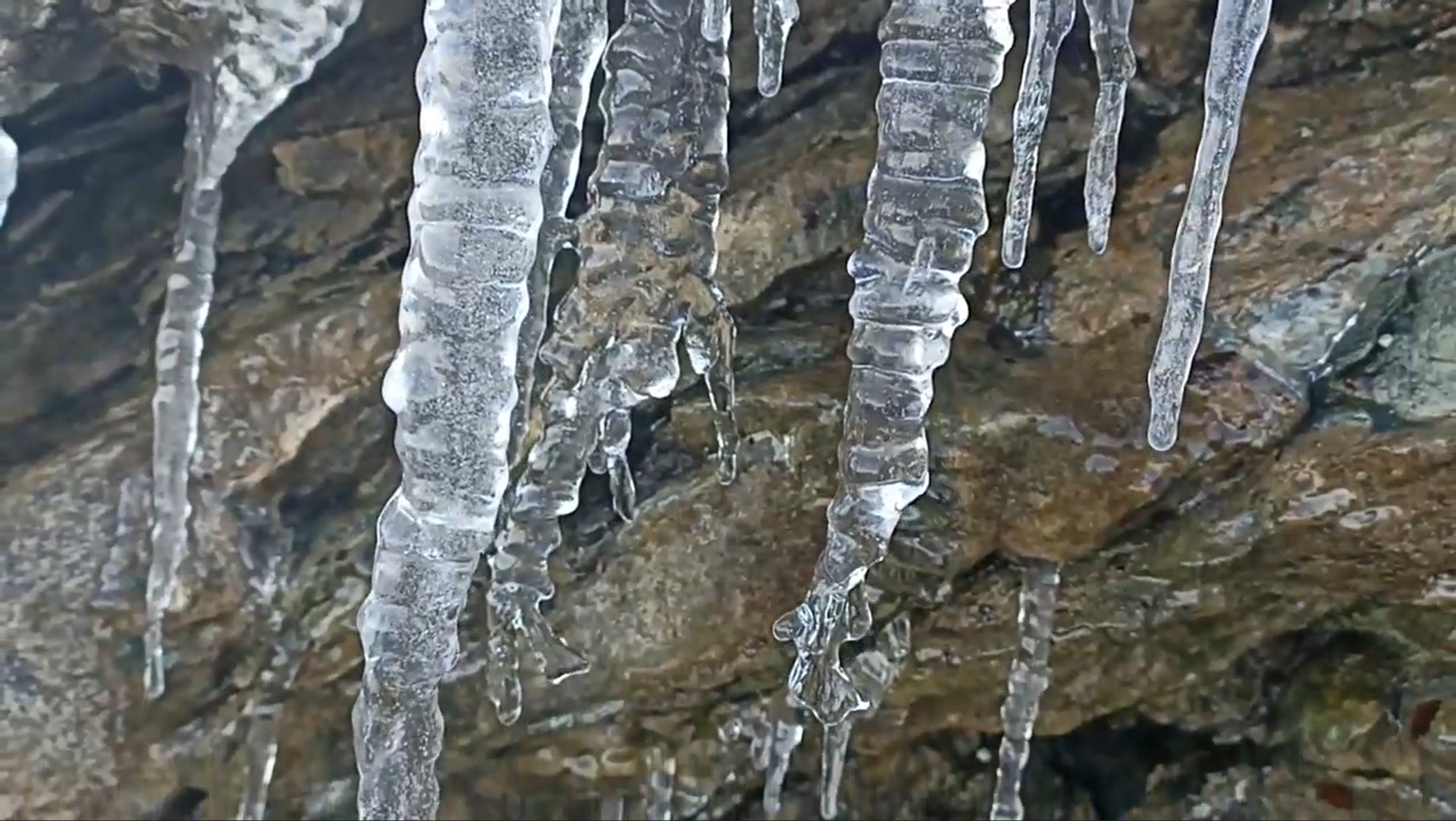
The sea is born in the mountains, we hear often in the Caribbean, but this could be also known in other parts of the world. The texts you read here are born in the conversations across the years, events and encounters between the three human authors, who at the moment of writing have been far apart from each other, and many more-than-human beings at different distance from each other. We meet on different occasions, we talk about art, water, lands, us, words. Speaking to each other indirectly through the sea, rivers and land we felt connected, as if we heard each other as if we were nearby.
Colombian rivers have been guiding Polina then and now across the sea they joined the Northern fjords. Streams, underground waters, plateaus, geological and atmospheric movements guide Jorge. Looking at the fjord, Polina imagines Desiree looking at the Michigan Lake looking at the fjord across the ocean. Desiree talks to the Michigan Lake waves and shores, imagining Polina looking at the fjords thinking of her across the ocean. Polina records the sound of the waves with Magma, the hydrophone designed and assembled by Jorge and hears his experiments with bioacoustics, sounds and pedagogies, seeing his reflection in the rivers running through the multiple water of the world towards the waves that come to her shore. Vocal cords vibrate to the rhythms of accordion of the new friends and back vibrating with the rhythms of videos and texts. The wind echoes the voices moving grass, trees, waves, sand grains, objects on the ground. Magma vibrates in response.
Our conversations echo in the splashes of the waves, in the screams of the sea gulls and birds of the Colombian forests. They mix with the memories of the land, with our memories of the past and future. Multiple layers. Multiple worlds. We read, we think, we talk in layers. The sky becomes the sea, the sea becomes the forest, the forest becomes the sky. They are together apart, interior and exterior of each other. We respond to each other in words, in singing, in sonic experimentations, in video… connected through the moving grounds: the movement – waters and the ancient bones – the rocks. They all are the performance and inquiry itself.
Media mediate the worlds: nothing illustrates nothing, and yet it does. But there is no product, this text, this film, these sounds, these words are ongoing becoming of each other, together with the water bodies, forests, stones, and ourselves.
One ocean_many oceans: A conversation between people, waters, lands, and poems
A conversation between the poems and the moving images : https://youtu.be/Zb1QfOcJ2Uc
We meet on different occasions, we talk about art, water, lands, us, words…
| Desiree: Me and the Lake no words only gesture concave convex concave convex motion teaches me to move in waves backwards and forwards in increments, knowledge that the living tips and edges of my bone are tensegrity bound Life Air, fire, earth, water, air, fire, earth, water, air, fire, earth, water, air, fire, earth, water, air, fire, earth, water, air, fire, earth, water, air, fire, earth, water, air, fire, earth, water, air, fire earth water her bones washed off by the beats of warm blue sunshine that fire Provides She teaches me the wind and tides. The dreaming Shows the path They are They are They are More And More More More More More More More More More More And Holds what is Nest Next Next And The heart soul tells me that if I am good hearted I will be lead Silver Lead Stone Lead Fire Lead water To my own heart To the land where Implicit Implicit Implicit Implicit Ecstasy Fires suns Of the line And the curve Waters earth And us. My part is taking place at the beach of lake of my beginning love where I learned to be free me as a baby. Her fresh air and loving kindness was my little girl’s friend and is still Moving Still Moving Still Moving Move Moving Move Moving Move Moving Move Move Move Moving Move Move Moving Move Moving Move Moving Moving Moving Moving Moving Moving Moving Moving Move Move Move Move Move Move move more Flow Follow Flow ARTS Arts Art Arts Flow Blood and hope blood and hope blood and hope blood and hope blood and hope blood and hope blood and hope Bones dirt and gloves Love lit breath fresh and giving freely home Home Home Home Homes/Home Back Front Sideways In space It Is For All There Is Enough For Us All Together Not Apart. | Polina: El canto del mar/ The song of the sea Como la falda mueven tus olas – Se abren, se cierren tus aguas Yo subo al cerro del bosque El bosque susurra y sabe Yo subo al cerro pa´ respirar El bosque susurra y siente El respiro profundo que trae el mar El respiro traído por el viento Mi falda se mueve como tus olas Cuando yo camino o bailo y pienso de ti Mis perros ladran, felices mueven sus colas Me enseñan a amar y a existir Tus arenas me pican; tu sal me refresca Tu ser me fascina; y te agradezco Yo estoy en tu casa aún sea lejos viajando Me asciendo al cerro, estoy respirando tu aire Me enseñas a partir, a ser plena Tu amor es tranquillo y tu silencio es lleno Con tu ser me llevas a respirar Con tu silencio me abrigas, con tu canto del mar Tu silencio es lleno; tu complejidad es perfecta, Tú no tienes fronteras, sino todo conectas. Tu susurro me llama, me escuchas, me hablas Me enseñas a bailar con el viento en mis alas Me enseñas a partir, a ser plena Con tus cantos diversos me abrigas, me llenas tu complejidad es perfecta, tu silencio es lleno el mar no tiene fronteras sino todo conecta. Translation: The fabric of my skirt moves like the sea Its waves open, close, open, close I go through the forest up the hill The forest trees are whispering and know I go through the forest up the hill to breathe The forest whispers, feels A profound breath brought by the sea The breath brought by its wind My dress moves as your waves Whether I walk or dance or even simply think of you My dogs bark, they are happy, wagging tails They teach me love, breathing and being Sand gently stuns my skin, your salt is so fresh Your being excites me and I want to thank you I am at home with you even if I travel far away I go through the forest up the hill to breathe You teach me how to let go, how to be plenty Your love is calm, your calmness is complete Your being gives me the air, it embraces me You breathe in life with your song of the sea Your silence is complete, you’re complex, perfect There are no borders in you, and you connect it all Your whisper is calling me, you listen to me, you talk to me I learn to dance following your rhythms and winds You teach me be enough and plenty, to withdraw, to let it go With your diverse songs you embrace me, and I feel complete Your calmness is complex, your complexity is perfect, There are no borders in the sea. |
Polina:
I breathe in the salty sea air from now from in the memory, my dress moves across the time and territories, connecting to the sea as kin, learning about self as a sea. Spanish is not my native language, but I was thinking about the Caribbean Sea and its inspirations as I walked up the woody hill looking at the bright light blue-dark emerald fjord in the distance and later on burying my face in the curls of my dogs` fur, breathing in the smell of the salt.
Jorge:
Devenir Magma / Becoming Magma
En el centro está el maremágnum ardiente del cual todo está hecho;
una inmensa bola de materia en fuego… útero cósmico… Magma
un viaje fluido me llevó por estratos policromáticos,
Atravesé capas intensas,
placas tectónicas,
cuencas sedimentarias
provincias ígneas
rocas duras y blandas,
metamórficas y volcánicas.
Presencie la explosión cámbrica.
areniscas y cristales
hasta llegar a la capa vegetal.
desde aquí puedo escuchar el paso de los cometas y las
tormentas geomagnéticas… La Sonosfera.
Los cristales de cuarzo guardan los secretos ancestrales para la fabricación de micrófonos de contacto e hidrófonos que traducen los susurros y vibraciones del universo.
El cuarzo, testigo silente de las eras, es un portador de la memoria de la tierra hecha energía. Desde lo más profundo de sus entrañas, y del suelo marino, hasta las cimas de las montañas, su presencia evoca resistencia y continuidad. Mineral y maestro, revela el misterio de la piezoelectricidad, donde la presión da luz a la electricidad dormida, un eco del gran aliento que mueve el universo.
Los micrófonos Magmas son como puentes entre mundos, narradores de la sinfonía cósmica en notas eléctricas. Desde las profundidades de los océanos, ríos, arroyos, rocas y movimientos geológicos, exploran la textura de la existencia, desenterrando melodías ocultas… resonando con la tierra.
Desde el susurro del cristal al murmullo del agua, podemos escuchar la música del universo. El agua, líquido primordial, narrador de la creación, lleva consigo los ecos del pasado y las promesas del futuro que ahora son registradas y amplificadas gracias al cuarzo…materia prima del Magma.
Los hidrófonos capturan los susurros del agua, las canciones de las profundidades, revelando los secretos ocultos en las corrientes y mareas.
Escuchando profundo en cada gota de agua, en cada susurro del viento, en cada vibración de la tierra, encontramos melodías eternas para fluir.
En el corazón de su investigación y práctica artística está la escucha como una búsqueda imperativa de empatía con lo humano y lo no humano, lo que le ha llevado a desarrollar una serie de instalaciones, dispositivos y performances que exploran la resonancia de la materia y el paisaje sonoro. En este contexto, Jorge ha desarrollado el dispositivo Magma, un hidrófono y micrófono de contacto DIY que ha sido utilizado por artistas e investigadores de diferentes lugares del mundo en campos artísticos, musicales, pedagógicos y de bioacústica.
Translation:
At the center is the fiery tidal wave from which everything is made;
an immense ball of matter in fire… a cosmic womb… Magma
a fluid journey takes me through the polychromatic strata,
I traversed intense layers,
tectonic plates,
sedimentary basins
igneous provinces
hard and soft rocks,
metamorphic and volcanic.
I witness the Cambrian explosion,
Sandstones and crystals
until I reach the vegetal layer.
From here I can hear the comets and geomagnetic storms passing by…
geomagnetic storms… The Sonosphere.
Quartz crystals keep the ancestral secrets for the manufacture of contact microphones and hydrophones that translate the whispers and vibrations of the universe.
Quartz, silent witness of the ages, is a carrier of the memory of the earth made energy. From the depths of its entrails, from the sea floor to the mountain peaks, its presence evokes resistance and continuity. Mineral and master, it reveals the mystery of piezoelectricity, where pressure gives light to dormant electricity, an echo of the great breath that moves the universe.
Magmas microphones become the bridges between worlds, narrators of the cosmic symphony in electric notes. From the depths of the ocean, the rivers, streams, rocks and geological movements, they explore the texture of existence, unearthing hidden melodies… resonating with the earth.
From the whispers of the crystal to the murmurs of water, we can hear the music of the universe. Water, primordial liquid, the narrator of creation, carries with it the echoes of the past and the promises of the future that are now recorded and amplified thanks to quartz… raw material of Magma.
Hydrophones capture the whispers of the water, the songs of the deep, revealing the secrets hidden in the currents and tides.
Listening deep in every drop of water, in every whisper of the wind, in every vibration of the earth, we find eternal melodies to flow.
At the heart of this conversation is listening as an imperative search for empathy with more-than-human, which leads Jorge and all of us in exploring the resonance of the matter.
Colombian rivers were guiding Polina then and now across the sea they joined the Northern fjords. They guide Jorge, streams, underground waters, plateaus, geological and atmospheric movements guide him. Looking at the fjord, Polina imagines Desiree looking at the Michigan Lake looking at the fjord across the ocean. Polina records the sound of the waves with Magma, the hydrophone designed and assembled by Jorge and hear his bioacoustics, sonic, pedagogical experiments, seeing his reflection in the rivers running through the multiple water of the world towards the waves that come to my shore. Vocal cords vibrate to the rhythms of accordion and back vibrating with the rhythms of videos and texts. The wind echoes her voice moving grass, trees, waves, sand grains, objects on the ground. Magma vibrates in response.
Our conversations echo in the splashes of the waves, in the screams of the sea gulls and birds of the Colombian forests. They mix with the memories of the land, with our memories of the past and future. Multiple layers. Multiple worlds. I read, I think, I talk in layers. The sky becomes the sea, the sea becomes the forest, the forest becomes the sky. They are together apart, interior and exterior of each other. We respond to each other in words, in singing, in sonic experimentations, in video… connected through the moving grounds: the movement – waters and the ancient bones – the rocks. They are the performance and inquiry itself.
Media mediate the worlds: nothing illustrates nothing, and yet it does. But there is no product, this text, this film, these sounds, these words are the ongoing becoming of each other, together with the water bodies, forests, stones, and ourselves.
This text is being written in Chicago which is ‘ located on the traditional unceded homelands of the Council of the Three Fires: the Ojibwe, Odawa, and Potawatomi Nations. Many other tribes, such as the Miami, Ho-Chunk, Menominee, and Sac and Fox, also called this area home. The region has long been a center for Indigenous people to gather, trade, and maintain kinship ties. Today, one of the largest urban American Indian communities in the United States resides in Chicago. Members of this community continue to contribute to the life of this city and to celebrate their heritage, practice traditions, and care for the land and waterways.’ (Art Institute of Chicago Website); in Trondheim, the land of the Southern Sami; in Medellín, the land of the Embera, Senú and Gunadule. These lands are home of plants, animals, and insects, fungi, minerals, rivers, and other more-than-living beings.
And to acknowledge that
Air, Fire, Earth, Water
and us are one,
are sacred
and alive
are part of wisdom traditions
around the world throughout time.
I/We make work/the work flows through
us/I/we work through/flows/fluid we are watercollectingwaterspreadingwaterpuddlingwaterinriverslargeandsmallwaterwave, we
WATER
collaborating.
(((((((((((((()))))))))))))))))))))))))))))))))))((((((((((((((((((((())))))))))))
I, Desiree, watch the work, I can’t remember what bit is mine..the soundlanguageblend, pouringintoone. Another. One. Another. One.
One.
((((((((((((())))))))))))))))))))))))((((((((((((((((((((((((()))))))))))))))))))
we are the edges
I, Desiree, look out the window and see the clouds. Then, feel them as water. I am nourished by them, and the sun that paints beautiful colors around them.
(((((((((((((())))))))))))))))))))))(((((((((((((((((((((((((()))))))))))))))))))
Polina and I, and the water collective work across borders, living on pieces of land separated by bodies of water, we communicate via internet, through the sky. I am standing in front of a window of a doll store on a busy Chicago Street, I move to a place where I can sit in the sun, it is late February and the weather is warm and soothing, I sit on some benches next to an iconic skyscraper, she is stately and calm and presents in whispers. The concrete benches are on a corner. The lake is two blocks away down the street, always on this street there is a breeze from the lake, today the breeze is small calm and soothing, swirling soft eddys of breeze of sky on my skin. The lake the sky my skin today. We talk about sediment and water thinking, water becoming. Later at the grocery store, I put one hand in front of the other, in front of the other, I think our collaboration are the waves, each work holding the next’s work, holding the nexts work, holding the next’s work, as our knowing arises and crashes onto the shore.
(((((((()))))))))))))))))))))((((((((((((((((((((()))))))))))))))))))))))))
On the periphery. Humans on the periphery. Humans not commenting/not commenting/not commenting/not knowing/just coming closer.
))))))))))))))))))((((((((((((((((((((((((()))))))))))))))))))))))))))((((((((
Outside of the grocery store, I stop and put down the bags and look at the concrete. I see how the cracks in the sidewalk makes a pattern matching the kind of action that created them.
I think, Polina thinks like water that starts small and spreads waxing and waning, through peaks and valleys, on inclines and declines, in different speeds. And my thinking is like the gentle waves of water that hit the concrete of the walking path along the lake shore. That water jumps onto the concrete, flowing upwards on the sidewalks incline, and returns to fill and jump out of the sides of the shoes that barely cover my feet, as another wave fills the shoes again, jumping up onto the concrete chasing its sister. The water is only a little cool on this warm day and sparkles in the sunshine.
((((((((((((((((((((((()))))))))))))))))))))))))))(((((((((((((((((((((()))))))))))
Bios:
Polina Golovátina-Mora, PhD is Professor in Film and Media in Education, Norwegian University of Science and Technology – NTNU, Norway. The overall focus of her work is meanings and ethics of relationality with the world, mixed senses and the attentive care they produce. She positions her artistic work as reflective and dispersed visual practice. In her recent projects, Polina has been exploring understandings the ocean proposes and the ethics of such co-creations which includes the way we write, speak and present with and about water bodies.
Desiree Yomtoob, PhD, aspires to be a water woman and is waiting for summer to come again so she can spend as much time as she can in, on and around the lake in Chicago. She is an independent scholar, arts based, and movement researcher. She is hoping that someone will do something, anything, to save this ailing world in which we live. She notices, applauds and encourages the miracles, large and small, that happen around her all the time. She studies love in all its guises. She teaches undergraduate media studies classes often and consults on methods projects from time to time. She is currently working on the use of creative methods in the field of design research.
Jorge Barco is a Colombian sound artist and curator whose work is situated at the intersection between cosmogony, ecology and sound. Over the past few years, he has conducted extensive research encompassing instrument making, field recording and experimentation with low technologies, brought together today in his project Máquinas Mestizas. His creative approach draws from diverse disciplines such as media geology, sound studies and ancestral and shamanic knowledge.