

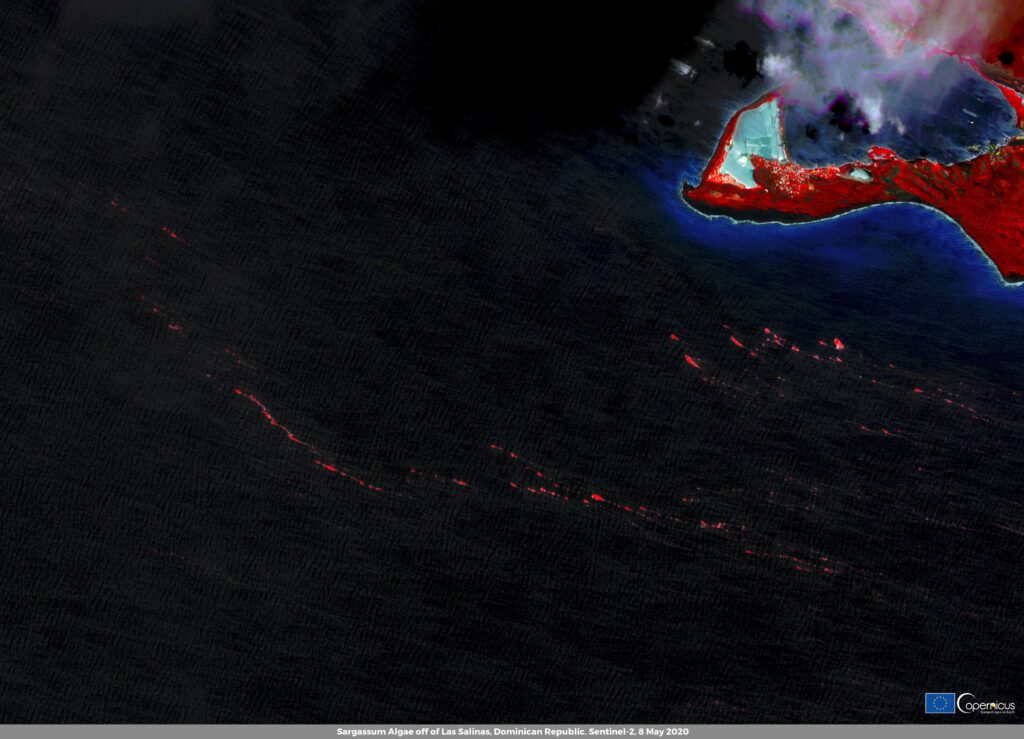
Contemporary crises have made water into a medium through which ecological, political, and social conflicts can be understood. Droughts, pollution, rising sea levels and increasing inequalities in access are just a few of the reasons why water occupies such a central place in environmental politics and ecological imaginaries. Across the Hispanic world, these environmental transformations acquire different meanings according to local ecological, historical, and cultural contexts. While some are linked to pollution and biodiversity loss, others foreground questions of memory, territorial violence, or the relationships between humans and more-than-human worlds.
It is crucial to highlight that, although water has always been a central motif in art, culture, and literature, contemporary ecological concerns have given these representations a new resonance. Across these literary and artistic imaginaries, water is often a force of agency that connects human and more-than-human bodies across memories, histories, myths, affects, and forms of grief. This relational understanding of water resonates with Astrida Neimanis’s proposition that “we are bodies of water”.[1] According to this cultural theorist, our watery embodiment is characterized by a “constant process of intake, transformation, and exchange,”[2] which suggests that bodies cannot be understood as autonomous or exclusively human entities. Rather, water highlights the porous connections that link human and more-than-human bodies, environments, and ecosystems through ongoing processes of relation and transformation. This approach understands water not only as a material force that maintains the physical links between bodies, territories, and environments, but also as a medium through which memories, histories, affects, and ecological traces circulate across time and space. From this perspective, oceans, rivers, and aquatic bodies appear as fluid archives, which can be understood as dynamic and living spaces where colonial, ecological, and emotional traces are preserved, reactivated, and continuously transformed.
Different manifestations of such aquatic archives can be found across contemporary Hispanic literature and artistic production. Examples include Rita Indiana’s Tentacle (2018), originally published as La mucama de Omicunlé (2015), Selva Almada’s Not a River (2024), originally published as No es un río (2020), and the aquatic imaginaries and siren-like figures present in Irene Solà’s literary and artistic creations. Although these works emerge from distinct geopolitical and cultural contexts—the Caribbean in Indiana’s case, the Argentine littoral in Almada’s, and the Catalan landscape in Solà’s—they share a common concern with water as a place of memory and relation. In each of these aforementioned works, oceans, rivers, and aquatic beings become active agents through which colonial, ecological, and affective histories are preserved, transmitted, and continually reshaped across interconnected human and more-than-human worlds.
In Rita Indiana’s polyphonic novel Tentacle, the ocean, water, and aquatic beings occupy the core of the narrative. This centrality is inextricably tied to the insularity of the Dominican Republic, in which water is not just a geographical point but a force that determines space, time and action. Through the novel’s time travels and multiple temporal layers, different aquatic configurations reflect the specific problems associated with water in each historical period. In the seventeenth century, the buccaneers move along the coasts of Hispaniola, and their presence is based on maritime commerce in the ocean. In the twenty-first century, Playa Bo becomes the site of fundraising initiatives aimed at preserving marine life, while events such as the tsunami, the disappearance of marine species, and the contamination of the Atlantic Ocean emphasize the ecological vulnerability of the Caribbean Sea. Finally, the marine anemone is a key figure not only in ontological and epistemological fluidity but also in relationality between human and more-than-human bodies. Water therefore does not play a merely decorative role in the novel. It determines actions, shapes the lives of the characters, and becomes a central character itself: a fluid presence that preserves, transmits, and transforms memories, histories, and epistemologies across time.
The novel’s non-linear structure, characterized by multiple temporalities and time travel, resonates with Kamau Brathwaite’s concept of tidalectics, which understands Caribbean history as a continuous process of excavation through the movements of the sea. Rather than disappearing, memories and lived experiences circulate across time and space, remaining inscribed in the ocean.[3] From this perspective, Tentacle suggests that contemporary forms of violence constitute a prolongation of those initiated during colonization. The violence associated with evangelization and the transatlantic slave trade extends into the present through new forms of neocolonial domination, political corruption, and environmental exploitation. As discussed in the introduction, environmental degradation has become one of the major challenges of the contemporary world, and in Indiana’s novel, this is reflected in the ecological catastrophe caused by the contamination of the Atlantic Ocean, which spreads across marine ecosystems as a consequence of the corrupt decisions of the Dominican government.
Nevertheless, the novel also imagines forms of resistance to these hegemonic structures through the figure of Olokun, the Yoruba deity associated with the depths, mysteries, and transformative power of the ocean. By recovering an Afro-Caribbean spiritual tradition, Olokun reconnects the colonial present with ancestral knowledge that had been marginalized by colonial domination. Together with the sea anemone, this figure further emphasizes the agentive role of the sea, as it is depicted not only as an archive of colonial violence but also as a space of transformation and renewal. Through the initiation of Acilde, one of the novel’s central characters, as Omo Olokun, contact with both Olokun and the anemone grants access to new forms of perception, temporal mobility, and ultimately the possibility of altering the course of history. As the priest explains to Acilde: “Eric te inició y ya sabes que eres el Omo Olokun: el que sabe lo que hay en el fondo del mar (…). Salva el mar…”[4] [“Eric initiated you and now you know that you are Omo Olokun: the one who knows what lies at the bottom of the sea (…). Save the sea…”; the author’s translation]. This encounter not only illustrates the transformative power of the ocean but also brings back the watery relationality discussed earlier. In Stacy Alaimo’s terms, it exemplifies transcorporeality: the material interpenetration of human and more-than-human bodies,[5] through which the sea becomes an active participant in the constitution and transformation of embodied existence. The ocean is then not only a repository of memory but also a means for imagining alternative futures.
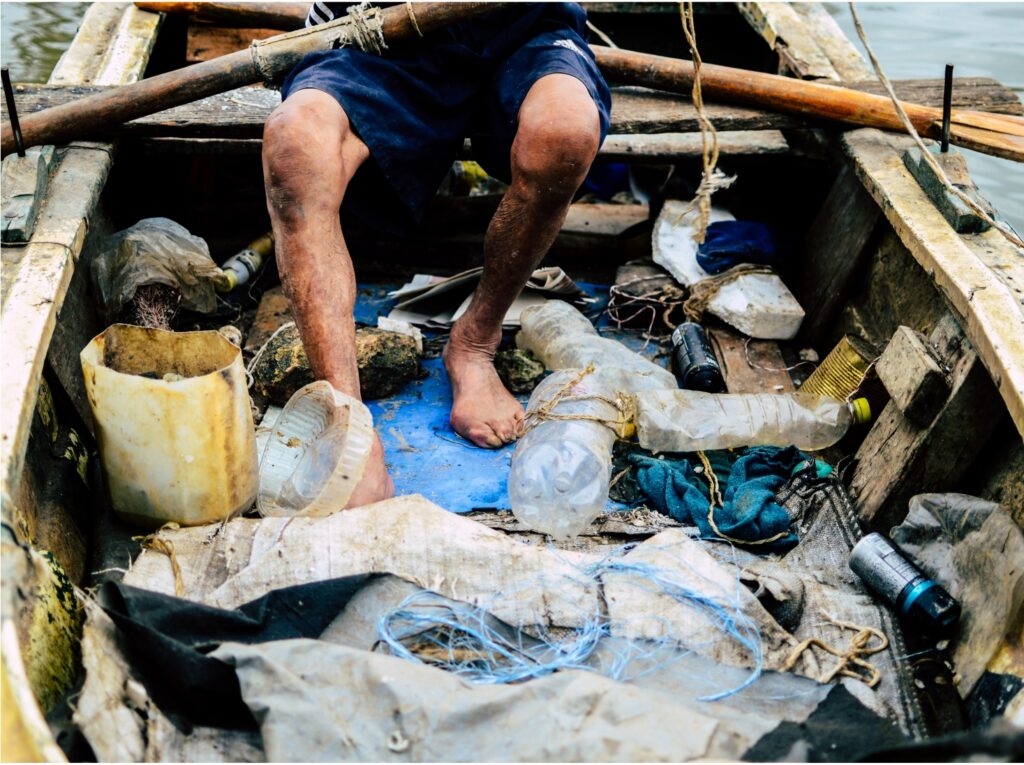
While Rita Indiana situates these fluid archives in the Caribbean Sea, Selva Almada relocates them to the river landscapes of Argentina, where water similarly becomes a living repository of memory, violence, and more-than-human relations. In Not a River, the river functions again as another character whose agency shapes the lives, emotions, and experiences of those who approach it. Whereas Indiana points to the repetition of colonial and neocolonial violence, Almada explores violence against the river by exposing the extractivist logic through which nature is treated as a mere resource. This dynamic is already visible in the opening scene, in which a group of men go fishing. Instead of a harmonious relationship with nature, the episode shows a gratuitous act of domination: the fish is shot with a gun, left to rot and eventually thrown back into the river without ever being eaten. Far from being a simple hunting episode, this scene depicts violence that is no longer connected to subsistence, exposing a relationship with the river based on exploitation rather than coexistence. By doing so, the river becomes a contested territory and, as Almada herself explains, it is represented as a body violated by masculine forms of domination and extractivist violence.[6]
Here again, Neimanis’s notion of bodies of water provides a useful framework for understanding Almada’s representation of the river as a living body rather than a passive landscape. Such a perspective destabilizes the idea of autonomous and self-contained bodies, emphasizing instead their relational and more-than-human constitution.[7] This relational understanding reaches one of its most powerful expressions in the passage where the narrator insists that “it’s not a river. It’s this river” and, similarly, “it wasn’t a ray. It was that ray.”[8] By rejecting generic categories in favor of singular beings, Almada refuses to reduce the river and its inhabitants to abstract natural resources. Instead, every body acquires its own material presence, history, and agency. The title Not a River therefore acquires a deeper ontological meaning: the novel is not about “the river” as a single, universal entity but about a living body which cannot be divorced from the memories, feelings and more-than-human relationships that are present in it. Consequently, violence against the river affects not only nature but also the human communities that depend on it, highlighting the close relationship between human and more-than-human life.
It is worth noting that this understanding of interconnectedness and relationality is further reinforced through the fate of one of the novel’s protagonists, Eusebio, who dies in the river. His death, however, does not imply his complete disappearance since his spirit continues to haunt the narrative, suggesting that the past constantly resurfaces and illustrating how the river itself functions as a fluid archive. This particular relationship between death, water, and haunting also reinforces Brathwaite’s tidalectic logic discussed earlier. Once again, the past refuses to disappear and repeatedly resurfaces in the present, underscoring the cyclical circulation of memory, grief, and violence rather than their progression according to linear chronology. Following this logic, the river becomes more than the site of death. Rather than functioning merely as a setting of loss, it emerges as a material space in which past and present constantly overlap, preventing death from marking a definitive ending. Because Eusebio’s presence never completely disappears, those who remain continue to experience him as part of the river. The past therefore never becomes fully detached from the present. In this sense, the river functions as a fluid archive, not because it simply stores memories, but because it keeps them in circulation and returns them to the world of the living.
As the previous examples have shown, water functions as an archive of colonial and affective violence in both Rita Indiana’s and Selva Almada’s novels. Irene Solà, however, offers a different perspective by turning towards aquatic female figures whose fluid bodies preserve marginalized forms of knowledge, memory, and expression. In her acclaimed novel When I Sing, Mountains Dance (2022)originally published as Canto jo i la muntanya balla (2019), the polyphony of voices, the coexistence of multiple temporalities, and the constant blurring of boundaries between reality and the supernatural create a profoundly relational narrative. Among the novel’s most compelling liminal figures are the dones d’aigua (“women of water”), mythical female beings from the Catalan tradition associated with rivers and springs. Neither fully human nor entirely supernatural, they break down rigid ontological categories and expand the novel’s polyphony beyond the human. Oscillating between myth, history, and imagination, their presence remains uncertain: some characters claim to have seen them, while others dismiss them as mere legends. They thus exist in the unstable space between memory and oblivion, a tension that is powerfully expressed when one of the characters admits: “Ya no me acuerdo del recuerdo de las mujeres de agua.”[9] [“I no longer remember the memory of the women of water”;the author’s translation]. What is being lost, therefore, is not only the mythical figures themselves but also the collective memory through which they have been transmitted across generations. Nevertheless, despite this apparent process of oblivion, Solà restores narrative agency to the dones d’aigua by allowing them to speak. In doing so, she transforms them into fluid archives through which marginalized voices, submerged histories, and alternative epistemologies continue to circulate despite the threat of disappearance.
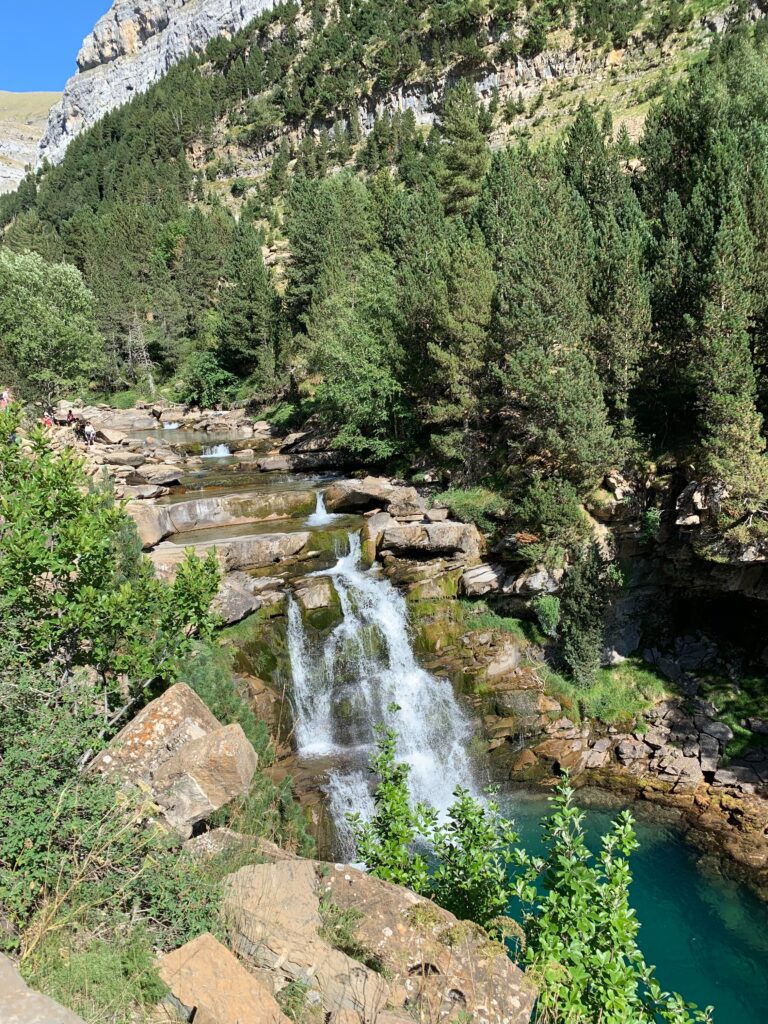
The reflection on aquatic female figures continues in Sirena, the performance created by Irene Solà and performance artist Laia Estruch in 2021, where the relationship between water, voice, and agency occupies a central role. Like the dones d’aigua, sirens have long been represented through patriarchal imaginaries as seductive, dangerous, eroticized, or monstrous beings whose voices were mediated by male narratives rather than belonging to themselves. Drawing on multiple literary traditions—from Homer’s destructive sirens to Andersen’s Little Mermaid, who sacrifices her voice in exchange for a human body—the performance reclaims these hybrid aquatic figures as speaking subjects capable of narrating their own stories. According to Solà and Estruch, the performance investigates the possibilities of the voice travelling within and beyond a body of water, transforming water into a medium through which the voice circulates, resonates, and acquires agency.[10] In this sense, voice itself becomes a form of watery embodiment, allowing these fluid bodies to be read once again through Neimanis’s notion of bodies of water, while simultaneously recalling Haraway’s chthonic and boundary-crossing bodies that destabilize distinctions between human and more-than-human, body and voice, nature and culture.[11] A common thread running through the work of Neimanis and Haraway is the rejection of the logics of autonomy and individualism in favour of relational modes of existence. Both emphasize that beings emerge through their relationships with other bodies, ecosystems, and environments. In this sense, water is not simply a setting but an active agent that, on the one hand, shapes the bodies of these aquatic figures and, on the other, endows them with a voice. The sirens’ voices therefore do not simply cross the boundaries between human and more-than-human or nature and culture; they inhabit these liminal spaces, making them sites where forgotten histories can resurface. Another significant aspect is that rather than functioning merely as mythical creatures, these aquatic bodies become fluid archives of forgotten voices, recovering stories, memories, and forms of knowledge that hegemonic patriarchal discourses have historically silenced.
This analysis demonstrates that fluid archives do not constitute a single or homogeneous category. Rather, they emerge through multiple aquatic configurations that preserve and reactivate different forms of memory across interconnected human and more-than-human bodies. In Rita Indiana’s Tentacle, the sea functions as an archive of colonial memory, exposing the continuity of colonial violence within contemporary ecological crises. In Selva Almada’s Not a River, the river becomes a haunted archive where grief, absence, and unresolved violence continually resurface. Finally, Irene Solà’s literary and performative creations transform aquatic female figures into archives of silenced voices, recovering forms of knowledge and agency historically marginalized by patriarchal narratives.
Taken together, these works reveal that water is never merely a setting or a metaphor. Oceans, rivers, and aquatic bodies emerge as active material forces that preserve, transmit, and transform memories, affects, and histories while also reshaping the relationships between bodies, territories, and environments. Rather than proposing a nostalgic return to nature, these authors invite us to rethink ecological crises through relational forms of coexistence, reminding us that environmental violence, colonial histories, and social inequalities are inseparable processes circulating through the same fluid worlds.
Finally, these fluid archives encourage us to reconsider that water does not simply preserve what has been forgotten; it continuously dissolves the boundaries through which we have traditionally understood memory, bodies, and the more-than-human world. To read water as a fluid archive is therefore not only to rethink memory, but also to recognize an ethical responsibility towards the living worlds whose histories continue to circulate through it. Such an ethical perspective ultimately calls not only for protecting water as an external resource, but also for the recognition that violence against water is inseparable from violence against the interconnected worlds it sustains. It consequently offers a way of understanding water as a relational space of memory, coexistence, and shared responsibility through which alternative forms of knowledge and resistance continue to emerge and circulate.
[1] Astrida Neimanis, Bodies of Water: Posthuman Feminist Phenomenology, London, Bloomsbury, 2017, 3.
[2] Ibid.16.
[3] Kamau Brathwaite, Conversations with Nathaniel Mackey, Rhinebeck, NY, We Press, 1999, 34.
[4] Rita Indiana, La mucama de Omicunlé, Cáseres, Editorial Periférica, 2015, 133.
[5] Stacy Alaimo, Bodies of Water. Posthuman Feminist Phenomenology, London, New York, Oxford, New Delhi, Sydney, Bloomsbury Academic, 33.
[6] María Malusardi, “El río, ese cuerpo avasallado por el machismo. Entrevista a Selva Almada,” Era Verde, April 26, 2022, https://eraverde.com.ar/el-rio-ese-cuerpo-avasallado-por-el-machismo/ (accessed June 25, 2026).
[7] Neimanis, Bodies of Water, 17.
[8] Selva Almada, Not a River, Edinburgh, Charco Press, 2024, 76-77.
[9] Irene Solà, Canto yo y la montaña baila, Barcelona, Anagrama, 2019, 232.
[10] Palau de la Música Catalana, “Laia Estruch i Irene Solà presenten al Palau de la Música Catalana Sirena, una performance que explora el poder i la flexibilitat de la veu dins l’aigua,” https://www.palaumusica.cat/ca/laia-estruch-i-irene-sola-presenten-al-palau-de-la-musica-catalana-sirena-una-performance-que-explora-el-poder-i-la-flexibilitat-de-la-veu-dins-l-aigua_942290 September 14, 2021, (accessed June 28, 2026).
[11] Donna J. Haraway, Staying with the Trouble. Making Kin in the Chtulucene, Durham and London, Duke University Press, 2026, 19.
Bibliography
ALAIMO, Stacy, Bodies of Water. Posthuman Feminist Phenomenology, London, New York, Oxford, New Delhi, Sydney, Bloomsbury Academic.
ALMADA, Selva, Not a River, Edinburg, Charco Press, 2024.
BRATHWAITE, Kamau, Conversations with Nathaniel Mackey, Rhinebeck, NY, We Press, 1999.
HARAWAY, Donna J., Staying with the Trouble. Making Kin in the Chtulucene, Durham and London, Duke University Press, 2026.
INDIANA, Rita, La mucama de Omicunlé, Cáseres, Editorial Periférica, 2015.
MALUSARDI, María, “El río, ese cuerpo avasallado por el machismo. Entrevista a Selva Almada.” Era Verde. April 26, 2020. Accessed June 25, 2026. https://eraverde.com.ar/el-rio-ese-cuerpo-avasallado-por-el-machismo/.
NEIMANIS, Astrida, Bodies of Water: Posthuman Feminist Phenomenology, London, Bloomsbury, 2017.
Palau de la Música Catalana. “Laia Estruch i Irene Solà presenten al Palau de la Música Catalana Sirena, una performance que explora el poder i la flexibilitat de la veu dins l’aigua.” September 14, 2021. Accessed June 28, 2026. https://www.palaumusica.cat/ca/laia-estruch-i-irene-sola-presenten-al-palau-de-la-musica-catalana-sirena-una-performance-que-explora-el-poder-i-la-flexibilitat-de-la-veu-dins-l-aigua_942290.
SOLÀ Irene, Canto yo y la montaña baila, Barcelona, Anagrama, 2019.
Bio
Katarzyna SOBONIAK is a PhD candidate in Hispanic Studies at the Université de La Réunion (France). Her research is grounded in ecofeminist and decolonial perspectives and focuses on representations of ecological crises in contemporary Hispanic literature. Her interests center on the analysis of the relationships between body, nature, and power in works by women writers from Spain and Latin America.