Tag: creative writing

  • Tossing their heads in sprightly dance

    by Franziska Maria Bergholtz

    resolve these behavioral cancers before
    they become more
    sexually suggestive
    using the method is simple
    a potent message throughout the body

    being “hit in the head” with a bad idea
    fear, dominance, confusion, or pain
    there are over a hundred emotes that let you
    express yourself and swallow

    women (mostly) can show off their hair
    pain could also be triggering this

    (especially of old people)
    a great deal of tension in the neck
    eye staring, and tossing

    you can also produce a like effect
    an opposition reflex or even a displaced behavior
    take a drink of water, lean forward,
    energetic and in good health
    a broadcast signal to anyone

    there isn’t a one-size-fits-all approach
    but that might just be part of the problem

    there are over a dozen unique dances
    you can perform; toss the head back and shake it
    your airway opens and your throat can close off

    these dances can only be obtained
    by purchasing them for real money.

    Working notes on Franziska’s poem:

    When I decided on that stanza of Wordsworth’s poem, I was curious to find out how the head-tossing nowadays would differ from the peaceful, elegant dancing that’s depicted in the poem. I simply searched online for the stanza, and later on for parts of the stanza, because in its entirety it only drew up more articles on Wordsworth. It was very surprising to see that the algorithm didn’t relate those words to dancing at all. Rather, I got a whole lot of websites on the topic of horse riding, also some advice on reading female body language while on a date and an article about the best way to swallow pills. The only website referring to dancing at all gave advice on how to purchase dance moves in a video game – what a brilliant contrast do the sprightly daffodils. I really enjoyed how the algorithm focused so much more on the bodily aspects of that dancing and tossing – incidentally showing in how many ways our bodies are political. Be it in terms of sexism, capitalism or the treatment of animals – which closes the circle to ecopoetics, I suppose.

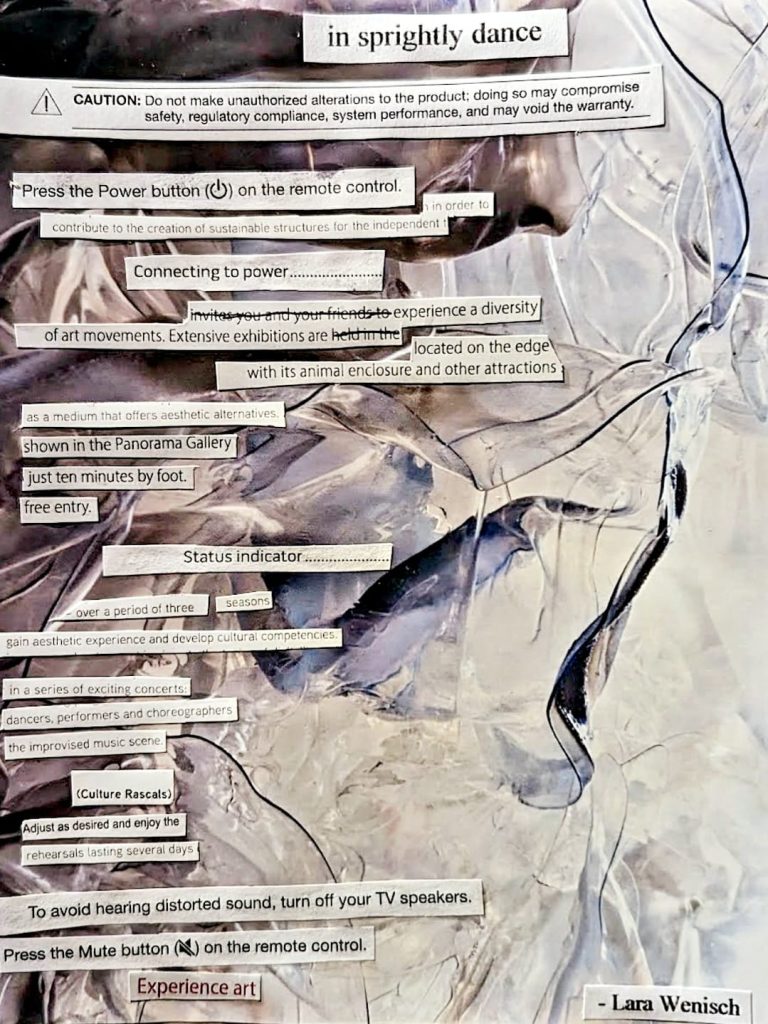
  • in sprightly dance

    by Lara Wenisch

    Working Notes on Lara’s poem:

    When I set out on the project to unframe Wordsworth, I was hesitant to say the least. To me, it felt challenging to an extent that I doubted I could create a piece that could relate blatantly unemotional material to the vision of the picturesque from Wordsworth’s poem. It wasn’t until I found myself sitting in the midst of a cut-up speaker manual and advertisement for a local tourist
    hotspot that I dared to break from a tradition in which I felt perfectly comfortable. But the break was inevitable. The words I chose, relating predominantly to the sense of sound and movement, began conforming to an idea of “sprightly dance”, infringed by technical requirements and still
    upholding the notion of being in one’s senses. Looking back on it now, my poem reflects much more the process of its creation than the relation to the original text. But in the end, I found something to say, even if the words weren’t my own.

  • Application for state-funded jocund company support during higher educational training under the Federal Training Assistance Act

    by Noah Brelage

    1. Extract from Personal Details:

    “I wandered lonely as a cloud 

    In vacant or in pensive mood, 

    Which is the bliss of solitude”

    2.1 Declaration of the person receiving the daffodils:

    I am aware that 

    I am obliged under § 60 of 

    Fluttering and dancing in the breeze 

    to immediately report any changes 

    Beside the lake, beneath the trees, 

    without being asked to do so 

    and to submit the documents required for the final determination of dances with the daffodils. 

    2.1 Appendix: Required supporting documents & other evidence

    ● stars that shine 

    ● sparkling waves in glee 

    ● sprightly dance 

    ● heart with pleasure 

    more documents may be requested upon further processing of the application

    3. Overview of personal information

    A duly enrolled as a student at 

    the university of a host, of golden daffodils, 

    A poet

    Working Notes on Noah’s poem:  

    I tried to find a document that is as far away as possible from a romanticised presentation of  nature, so I decided to use an application form for state funded financial support during study. I  myself have already oftentimes had the pleasure of reading these documents written in byzantine  wording far removed from the real world. Ironically, I felt some similarities in the needlessly  strange choice of wording in both the application form and the Wordsworth poem. Additionally, I  can not imagine something more distant from any concept of nature than an overly-arbitrary,  human-made, bureaucratic financial system. Juxtaposing these two became a fun challenge. The italicised parts of text are the parts I took from the Wordsworth poem. I wanted to make a  clear distinction between the texts to present the stitching-together of the original texts. The rest of  the structure of the text is, obviously, based on the application form I had used.

  • Queer relation and the landscape: animals, the neutral, and significant otherness

    Queer relation and the landscape: animals, the neutral, and significant otherness

    In this writerly contemplation of queer relation with animals and landscapes, Clare Patterson draws connections between sheep trapped in snow drifts, Clarice Lispector’s cockroach, Leslie Feinberg’s crow, and various “significant othernesses” that shape our lives and queer literature.

    🏵

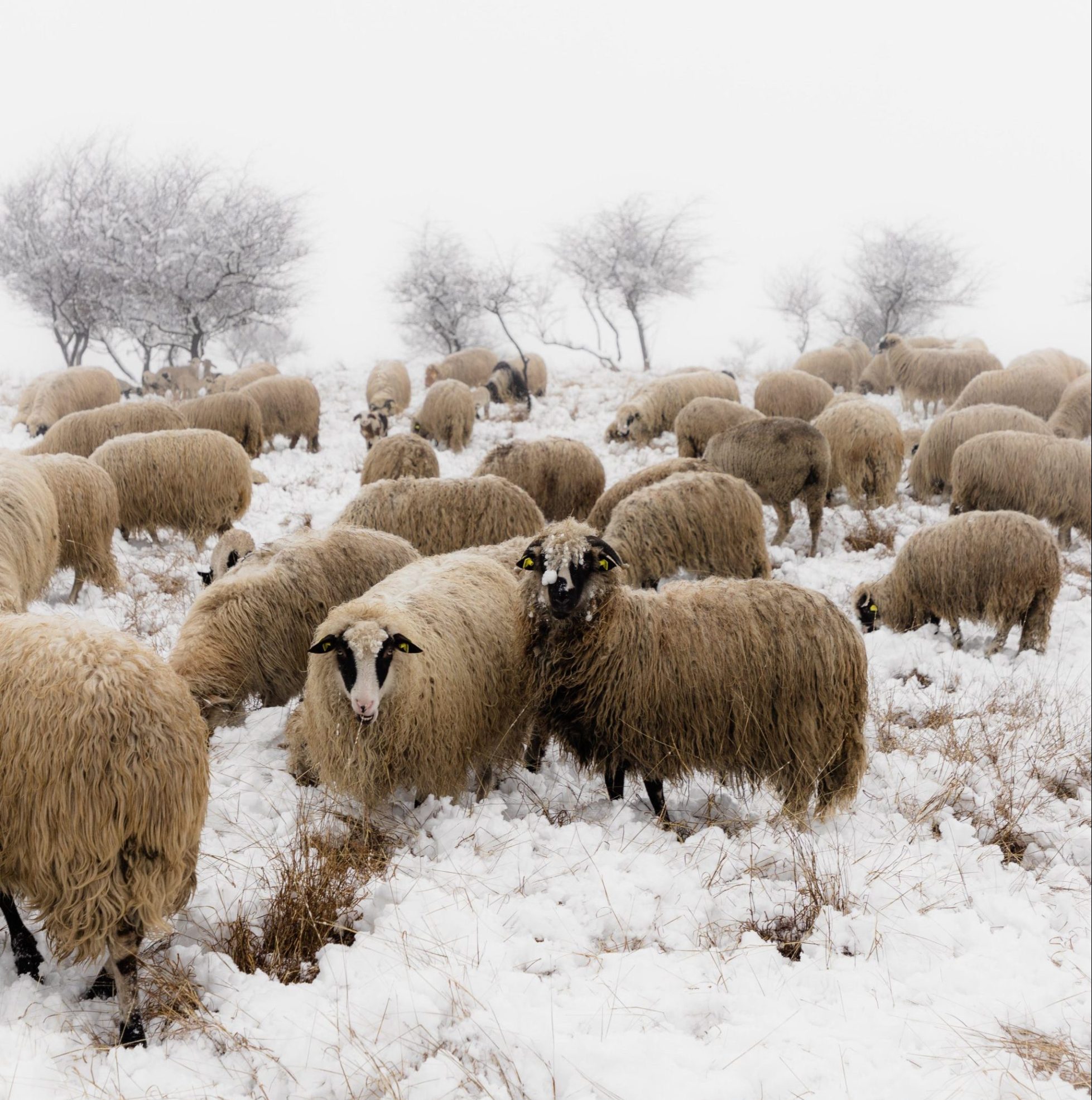
    At my grandmother’s house, I slept in a small back bedroom, with one window that looked out onto the fell behind. In the winter, I would wake up to a changed landscape of white fields, the absolute white rendering the sheep the murky pale yellow of teeth. Sometimes my uncle or grandad had to dig out sheep that had been buried under snowdrifts – huddled together in flocks and protected by their thick wool, they could survive for multiple days buried completely. 

    This image stuck in my mind as a child – the flock of sheep crowded together in some deep, blue hole, wool coats pressed together for warmth, hot breath clouding the air. In my head, it was like an image I’d seen in a children’s book, one in which mice, squirrels, and other small animals lived in trees hollowed out into human houses. In the winter they dug tunnels between them to travel to each other’s homes, lit them with Victorian gas lamps and candles. In reality, the sheep probably huddled and shivered, terrified, until human hands came along and dragged them out. 

    Many of the children’s books I read involved these anthropomorphised animals, cute little animal societies whose denizens wore non-specific “old fashioned” clothing and lived in cosy cottages with roaring log fires. There was an ecological bent to these stories, which made children engage with the natural world and the changing of the seasons, but also a deeply anthropocentric one, making animals agents of storytelling relatable, empathy-worthy creatures through human narratives. 

    I held both ideas in tandem in my mind – saw mice as both the subjects of sweet children’s stories, who lived nearly-human lives in churches or hedgerows, but also as creatures that needed to be caught in traps when they came into the house. They were the reason why farms have barn cats, why cats were domesticated in the first place. When my mum grew up on the farm it was filled with cats, both feral ones in the barn and tame and semi-tame ones in the house. Some were only seen in glimpses carrying mice in their jaws, some let my mum dress them up in doll clothes and slept in her toy cot. By the time I was there they had far fewer cats on the farm, only feral ones we hardly saw, but my mum always had pet ones at home who, despite their pampered indoor lives, retained their own instincts and strangenesses. 

    The cats would often bring dead birds into the house. They would also bring them in alive, sending them flapping around the living room in a wild panic. My mum found the birds frightening, but I was one of those children who loved animals, so catching and rereleasing them was always my job. I would do this by first backing them into a high corner of the room, and would then gently close my hands around them, the weight of them between my palms like a smooth stone. If I could, I would grasp them with their head poking out between my thumbs, hoping this would prevent them from being frightened, but sometimes they cowered in my hands in a little ball. 

    There was always a soft thrill in holding them for a moment – the tickle of their wings against my palms as they panicked, the release of tension as they realised they were trapped and froze completely still. I carried all kinds of birds this way – wrens, sparrows, blue tits, robins, even a woodpecker. Once, just before I let the bird go, he pecked me sharply on the hand, drew blood. In my child’s mind I was deeply offended that a creature I had rescued could be so ungrateful. Another time, the bird flew out of my hands before circling back to me once more, as if to say thank you. My cats once brought in a half-dead bird – I don’t remember what kind, but his chest was white, and a blossom of bright red blood had flowered there. I took him and carried him gently to our front garden, shut the cats in the house, and placed him on a large, cool leaf. I knew he was still living because his red chest moved up and down heavily, as if with effort. I checked back on him hourly or so, hoping he might recover but knowing deep down that he wouldn’t. As it was getting dark, my mum stepped out to look at him, and came back to tell me she was very sorry, but he was dead. I was furious at my cats and their claws and teeth, even though I understood they couldn’t help their nature. 

    Their nature – an idea we apply to animals, an idea of what separates us from animals. Something inherent to them that they have no control over, no consciousness of. Animals are unmoral, thinking only in terms of instincts, prey drives, motivations that live only within the body. There is no love in nature, only maternal instinct and hunger. Clarice Lispector, in her novel The Passion According to G.H., calls this unmorality “the neutral” – life that doesn’t think about law or morality, life that doesn’t think, life as life itself only. 

    In the novel, a middle-class Brazilian sculptress known only as G.H., the initials embossed on her luggage, crushes a cockroach with a cupboard door and, looking upon its dying, oozing body, experiences something between a psychic break, a transcendence of physical form, and a return to this animal, “neutral” state of being. In G.H.’s loss of self, Lispector describes a “link of mutual ferocity” connecting all life, all things human and nonhuman. This phrase containsg both comradely connection and uncontrollable violence. It is a phrase that makes me think of the food chain diagrams we filled in in biology class, drawing big, red arrows connecting soil to an earthworm to a robin to a hawk then looping the hawk and its postmortem decay back around to the soil to represent transference of energy. Animals eat each other forever – they know no better; they know nothing else. 

    Lispector’s protagonist begins this text as a specifically gendered subject – she is a “pretty replica,” someone who men read as “a woman of generosity and grace, and one who isn’t a bother, and one who doesn’t eat away at a man.” Her class position and her role as an artist gives her some freedom – she is seen to inhabit a social role “between man and woman”, able to move with conviviality across both male and female spaces, but within this is still limited to a extent by her gender – her sculptures “would be good if they weren’t so amateurish”. Her fear of “being a bother” exemplifies how her welcome in these spaces, her treatment as an equal, are conditional to the extent that they exist at all. This idea of (not) “eating away” at a man is notable when, at the climax of the novel, G.H. feels compelled to consume the innards of the dead cockroach, giving herself over to the “mutual ferocity” of nonhuman life. She begins from the female urge to fold herself up, to repress desire. Indeed,  Andrea Long Chu has described femaleness as “any psychic operation in which the self is sacrificed to make room for the desires of another”. The “neutral” she eventually embraces, this unmoral form of life, no longer makes room for the desires of another, and in fact barely contains the “desires” of the self, beyond the need to eat, to sleep, to procreate. The novel ends with an unselfconscious, in the most literal sense, consummation of the pure desire-driven actions of animal instinct. G. H.’s loss of self, her surrender to the neutral, is not only an act of un-humanisation but an act of ungendering. 

    🏵

    In winter evening half-consciousness, I watch something on the news about glaciers receding. Later, in an episode of a David Attenborough documentary, an arctic fox is shown crossing the open tundra, all white under a blue-purple winter night. These documentaries often wring so much pathos out of animals lives, projecting human emotions that are as unknowable to them as their minds are to us – assuming they experience love like we do, grief like we do, envy like we do. Here, though, we seem to be seeing a creature only as it is – for a moment it is just the fox, beautiful and white, crossing the tundra alone. I would quite like to be a creature of snow, I think absentmindedly, something with thick wool or fur and hardened paws. Generating my own warmth and sleeping in an ice hole in cold, blue safety. 

    I would like to have the relationship to my body that an animal has, I think – difficult to gender by sight, just living with little thought of it. Of course, many creatures have sex characteristics that can be easily read by humans, but not all. For those that can’t, most people don’t try too hard to read them. People sometimes seem irritated when I inadvertently misgender their dogs, as if it is something that should be immediately obvious. In Leslie Feinberg’s novel, Stone Butch Blues, the protagonist Jess Goldberg has a similar feeling about animals. Jess is a young adult still comprehending her gender identity, and doing so within a nuclear family that punishes her for the gender transgressions of wearing jeans or having short hair. Upset by her family’s conditional love and their attempts to feminise her, Jess finds some solace in nature:

    ‘I hurried out to the pond to catch polywogs in a jar. I leaned on my elbow and looked up close at the little frogs that climbed up on the sun-baked rocks.

    “Caw, caw!” A huge black crow circled above me in the air and landed on a rock nearby. We looked at each other in silence.

    “Crow, are you a boy or a girl?”

    “Caw, caw!”

    I laughed and rolled over on my back. The sky was crayon blue. I pretended I was lying on the white cotton clouds. The earth was damp against my back. The sun was hot, the breeze was cool. I felt happy. Nature held me close and seemed to find no fault with me.’

    The unintelligible response (for Jess) to an unintelligible question (for the crow) shows our ability to look at animals and their ability to look back – but also the vast gulf of communication between us, and our desire to make and project meaning onto that unknowability. Animals do not have gender, at least not as far as we know, and at least not in the way we do. In our mutual unknowing is an acceptance of the limits of our understanding. Donna Haraway calls this “relating in significant otherness”, the act of living with something we cannot know. Writing about her relationship with her dogs, she compares it to the love the worshipper has for God – the act of loving something too big or strange or far away to know its nature, the act of loving something that can only be understood by what it is not, and by knowing what one cannot understand. 

    “Nature” is often used in appeals to conservatism, especially around queerness – queer relationships aren’t “natural,” transition isn’t “natural,” in nature we only see reproductive sex and so only reproductive sex is “natural”. I could make appeals here to scientific evidence to the contrary – that many animals engage in same-sex relationships, that male seahorses carry pregnancies. I could cite numerous examples of reproduction in flora and fauna that are different and alien to ours – but that isn’t really the point I’m making. My appeal is more to a meeting with something unknowable without finding fault – to queer relation as a meeting with the limits of our understanding of another creature, or another being, without the desire to mould it into our own shape. Queerness opens up the idea that not everyone’s desires are the same, and in that are endless possibilities. Nature has never seemed to find any fault with me.

  • Birches like Barcodes

    Birches like Barcodes

    Art by Nick Hayes / Poem by Robert Macfarlane

    Writing Nature in the Anthropocene: Responses to Robert Macfarlane’s Masterclass, in Conversation with Joanna Dobson (Creative Writing Masterclass Series at Sheffield Hallam University, 18 November 2020)

    Response by Katharina Maria Kalinowski

    How do “we” respond to the many Anthropocenes in times of accelerated ecological crisis? Is it possible to write the legible strata of the earth? Do we need new forms of writing to register invisible and incomprehensible layers of a world that exceeds the limits of our understanding (hasn’t it always)? At the borders of language, how can writing and activism intersect? Are “we”, humankind, “good ancestors” for generations to come?

    Given the current state of the ecosphere, I’d be inclined to answer the last question with “no”. However, viewing humankind from a species point of view is problematic if we consider how explosive disparities shape the living conditions of the current generation on a daily basis. Following the argument that climate change is not so much anthropogenic as “sociogenic”,[1] the question concerning our heritage pushes against a homogenous humankind and opens up to a microcosm of stories with more-than-humankind/ness.

    The entanglement of these stories in a larger system is encapsulated in the last line of Macfarlane’s intricate poem “Heartwood”: “Have you heartwood, cutter? / Have those who sent you?” Dedicated to trees facing “unjust felling”, the poem, part charm, part song, part wood, can be seen as a piece of lyrical activism that enchants without euphemising and interrogates without scapegoating.

    One of the dangers of the (geochronologic) Anthropocene is its tendency to naturalise violent social and economic divisions and present the state of the world as inevitable. Here’s where writing can complicate, diversify, and wager on alternative scenarios; here’s where poetry can make something happen: what stuck with me most is Macfarlane’s cautious, yet unfalteringly urgent belief in the spell-binding potential of writing to re-invent form and to observe, to question, to touch, to affect, to change. Investigating what may be framed as the “golden spike” of the Environmental Humanities, namely the ever-present question whether poetry, or literature in general, can “save the earth”,[2] he offered an insightful response, unsurprisingly starting with “no” (again).

    For Macfarlane, the “golden spike”-question needs revising; it should really be asking: can literature join forces with other movements and creative arts to contribute to political changes? The answer to this is, finally: yes, of course! Macfarlane’s “Heartwood”, which became part of the Sheffield tree felling protests, is only one of many examples of how writing can challenge the status quo and create a shared space to imagine other voices and other worlds. Generating sets of new, unexpected relations, his texts make me wonder about the connection between (natural?) birches and (artificial?) bar codes, and how we poetically embody nature as more than a consumable good changing ownership through a red-light beep.

    In this sense, Macfarlane’s suggestion to “wearily embrace” anthropomorphic modes reminds me of Jane Bennett’s notion of vital materialism, in which “a touch of anthropomorphism” can “catalyse a sensibility” to a re-enchanted world filled with variously composed animate materialities vibrantly alive.[3] It further prompts critical reflection on anthropocentric assumptions determining what counts as human – and therefore as anthropomorphic – in the first place: it is arguably easier to categorise something as human-like than to categorise the human as something-like, as one among many unique beings that share their vulnerable lives in the Anthropocene.

    Literature cannot afford to choose the easier way. Embedded in a socio-cultural, political continuum, writing is one among many active and expressive forms that can make the world not only more comprehensible but also more liveable. It is neither separate from other forms of activism, nor does it exclude them – literature is shaped by its ability to both amplify and make silence for other voices. Nothing sums this up better than the following comment posted in the Zoom chat, one of many words that stayed with me long after clicking on “leave meeting”:

    Sometimes you have to tie yourself in knots about anthropomorphism and sometimes you have to spend your weekend dressed as a frog at the nature reserve open day to engage people and there’s space for both I think!

    By Rachel Dowse, sent in the Zoom chat


    [1] Andreas Malm and Alf Hornborg, “The Geology of Mankind? A Critique of the Anthropocene Narrative”, The Anthropocene Review, vol. 1, no. 1, 2014, pp. 62-69 (66).

    [2] The phrase is borrowed from John Felstiner’s book Can Poetry Save the Earth? A Field Guide to Nature Poems, Yale UP, 2010. Question to the reader: What would poetry have to be exchanged with in this phrase to prompt a “yes” response?

    [3] Jane Bennett, Vibrant Matter: A Political Ecology of Things, Duke UP, 2010, p. 99.

    Response by Melina Lieb

    I no longer remember why, but I had felt a bit down on the day of the masterclass, and logged into Zoom hoping it would cheer me up. Instead, it left me even more pensive, though in a strangely reassuring way. I know that the world is in a precarious state, but often I don’t know how to cope with the anxiety caused by this knowledge. I suppose others feel the same, but I usually cannot hear them in the echo chamber of my own head. Talking or listening to people talk about the subject helps a lot. It might not immediately solve problems, but hearing your own thoughts and feelings reflected by others makes them more endurable. You are not alone. And as the saying goes: Every dripping wears the stone.[1]

    Macfarlane found very fitting words for the feeling I’ve described: “The world has begun to make nonsense of realism”. The times we’re living in just are eerie and gothic. And this distortion is being recognised by literature. In Underland, Macfarlane pursues the question: “Are we being good ancestors?”. As Katharina highlights above, the answer too often is “no”. Driving through birch forests like barcodes, Macfarlane arrives at the only place where he would say that people have done a good – or at least, the best possible – job of being good ancestors. This place is Onkalo, the world’s first permanent repository for nuclear waste, on the Finnish island of Olkiluoto.[2] On hearing the name, I remembered watching a film about this place, years ago. It was called Into Eternity: A Film for the Future. I remember a match being lit in a dark cave, illuminating a man with a yellow helmet, talking in a solemn voice. I don’t remember his exact words, but he might have said what is stated on one of the movie posters: “We need you to know that this place should not be disturbed. You should stay away from this place. Then you will be safe”.

    When the people who built and filled the storage are no longer there, the place will speak for itself. Will it seem as eerie to our descendants as it already seems to me now?

    Speaking about speaking places, Macfarlane describes another potentially eerie site, though despite its “chilling” atmosphere, it has a fascinating charm to him. Orford Ness, a shingle spit on England’s Suffolk coast was a nuclear testing site but has now been given back to the wild and is protected by the National Trust. Inspired by this landscape, Macfarlane published Ness, his attempt at a different version of a medieval play on nature lashing back against the military-industrial complex. “Superheroes” of different genders, composed partly of organic matter, partly of the detritus of capitalism and consumerism – “speaking in swifts”, with “bones of plastic” – rush to the peninsula. Macfarlane recites, ending each verse with a warning: “Look, here he comes. – Look, here she comes. – Look, here they come. – Look, here as comes”.

    The power of these words still remains with me. It is one of Macfarlane’s great strengths to send powerful words out into the world, spells, songs, charms, chants. They are simultaneously an ushering and inspiration, intended to be spoken and extended by as many voices as possible – especially young voices, children and teenagers, our descendants. May they find a new way of speaking, of getting over the eeriness of our times, together.


    [1] This is a translation of the common German idiom “Jeder Tropfen höhlt den Stein.” A more common phrasing in English might be “Constant dripping wears the stone.” In this case, though, I wanted to place the emphasis on “every” drop.

    [2] See also: https://www.theatlantic.com/magazine/archive/2017/10/what-lies-beneath/537894/


    Authors:

    Katharina Maria Kalinowski is a bilingual poet and EUmanities fellow at the Universities of Cologne and Kent. Her creative-critical PhD project focuses on ecopoetics, the Anthropocene, and expanded forms of translation. Her publications include Magma, Epizootics, and the Journal of British and Irish Innovative Poetry.

    Melina Lieb is a PhD candidate and lecturer at the Faculty of Translation Studies, Linguistics and Cultural Studies at the Johannes Gutenberg-Universität Mainz/Germersheim, Germany. Her research focus is on 21st-century British Nature Writing, ecocriticism and ecopoetry. In her dissertation she considers the role of the “common” in this field of literature, including aspects such as the everyday, the ordinary and the familiar as well as the shared and the political. Melina also writes her own prose and poetry inspired by the natural world, both in English and German.

  • Lehrprojekt: Nature Writing und Übersetzung

    Lehrprojekt: Nature Writing und Übersetzung

    Image by Sarah Brown on Unsplash

    — This post is also available in English, please click here to read the English version —

    Das Sommersemester 2020 war in mehrerlei Hinsicht ein ungewöhnliches. Der zwölfwöchige Bachelor-Kurs, den ich unterrichtete, war mein erster, noch dazu im Online-Format, und ich hatte vor, ihn direkt mit einem kreativen Lehrexperiment zu beginnen. Es ging um die Übersetzung von aktuellem britischen Nature Writing, insbesondere von Auszügen aus Mark Cockers A Claxton Diary: Further Field Notes from a Small Planet (2019). Bevor es an die tatsächlichen Übersetzungen ging, bekamen die Studierenden eine kreative Schreibaufgabe, bei der sie ihr eigenes Stück Nature Writing verfassen sollten. Ursprünglich hatte ich das als Gruppenunternehmung geplant, zu der wir während einer Sitzung alle gemeinsam nach draußen gehen würden. Doch da aufgrund des Lockdowns nur Online-Unterricht möglich war, beauftragte ich die Studierenden, die Aufgabe individuell in ihren jeweiligen Umgebungen auszuführen.

    In diesem Artikel möchte ich die Ergebnisse dieser Aufgabe vorstellen. Zuerst werde ich die Aufgabenstellung erläutern und die Texte der Studierenden skizzieren. Dann werde ich die Ergebnisse einer Umfrage beleuchten, in der es um die Auswirkungen und den positiven Nutzen der Aufgabe ging. Schließlich werden einige Beispiele der studentischen Texte präsentiert.

    Die Aufgabe

    Die Aufgabenstellung lautete wie folgt: „Nehmen Sie sich mindestens eine halbe Stunde Zeit, die Sie mit der Natur verbringen. Das kann im Garten sein, in Wald, Feld oder Wiese, in der Stadt, gar auf dem Balkon oder am geöffneten Fenster. Schreiben Sie dann (oder währenddessen) über Ihre Eindrücke. Schreiben Sie mindestens eine Seite Fließtext (Gedichte sind ebenfalls möglich).“ Die Texte waren auf Deutsch zu verfassen, der Zielsprache der späteren Übersetzungen.

    Die Studierenden verfassten eine Bandbreite ansprechender und reflektierter Texte. Die meisten schrieben Prosa, eine Studentin jedoch komponierte ein nahezu imagistisch anmutendes Gedicht über ihren Weg zur Arbeit. Die Hälfte der Studierenden berichtete über einen Spaziergang, wobei die Umgebungen von Feldwegen über Waldwege bis zu Flussufern changierten. Manche liefen abends, um die Farben des Sonnenuntergangs zu genießen. Andere wurden von ihrem Hund begleitet und waren an tägliche Spaziergänge gewöhnt. Eine Studentin ging im Regen hinaus, ihrem Lieblingswetter. Sie alle erzählten von beruhigenden und belebenden Erfahrungen, und von Details, die ihre Aufmerksamkeit gebannt hatten: ein Kaninchen, eine singende Lerche, süß duftende Holunderblüten, ein Feuersalamander. Nicht nur Spaziergänge boten Verbundenheit mit der Natur. Die beschriebenen Umgebungen changierten von Voralpen-Seen bis zu städtischen Balkonen und Fensteraussichten. Die Studierenden bewiesen ein Auge für Details, Farben und Formen, registrierten Geräusche und Gerüche. Unter ihren Texten waren sowohl atmosphärische und emotionale Stücke als auch philosophische Reflexionen über den Platz der Menschen in der Natur und die Verbundenheit aller Lebewesen. Es war ihnen Nature Writing in all seinen Facetten gelungen und sie zeigten so die vielfältigen Qualitäten dieser Art von Literatur.

    Auswertung der Aufgabe

    Da die Pandemie neue und unerwartete Herausforderungen ins Universitätsleben brachte, war mein Fachbereich an neuen (Online-)Lehrkonzepten interessiert, mit denen Dozierende auf diese reagiert hatten. Im Rahmen ihres ausgeprägten Engagements für qualitative Lehre stellte die Johannes Gutenberg-Universität Mainz Mittel für eine wissenschaftliche Hilfskraft zur Verfügung, die bei der Aufarbeitung der erprobten Konzepte half. Am Ende des Kurses erstellte sie eine anonyme Umfrage mit meinen Fragen, dann sammelte sie die Antworten und fasste sie zusammen (11 von 13 Studierenden hatten geantwortet). Mich interessierten besonders zwei Dinge:

    1. Bezüglich meiner pädagogischen Ziele: Welchen Effekt hatte die kreative Schreibaufgabe auf die Übersetzungserfahrung?

    2. Angesichts der jüngsten Umstände: Hatte die Aufgabe positive Auswirkungen auf die Studierenden während des Lockdowns?

    Die Umfrage startete mit dieser zweiten Frage, welche nun bejaht werden kann. Nahezu alle Studierenden hatten die bewusste Beschäftigung mit der Natur als entspannend, meditativ, gar tröstend empfunden. Die meisten hatten sich entschieden, sich zunächst ganz in die Natur zu vertiefen und erst im Anschluss auf ihren Laptops zu schreiben; manche hatten sich Notizen auf Papier gemacht. Sie hatten die Aufgabe als willkommene Abwechslung empfunden, sowohl zu üblichen Uni-Aufgaben als auch zum Lockdown. Eine Studentin berichtete, sie sei motivierter gewesen, die Aufgabe früher als sonst zu erledigen. 

    Das Online-Format des Kurses hatte nach Eindruck der Studierenden ihre positive Erfahrung des Kurses nicht spürbar beeinträchtigt. Obwohl manche einen Austausch ihrer Eindrücke in der Klasse begrüßt hätten (ein solcher fand nicht statt; ich gab lediglich individuelles Feedback), waren sich alle einig, dass sie das individuelle Erlebnis der ursprünglich geplanten Gruppenunternehmung vorzogen. Dadurch waren sie fähig, sich besser zu konzentrieren, und konnten Ort und Zeit des Exkurses frei wählen.

    Die Aufgabe schien außerdem positiven Einfluss auf das Übersetzungserlebnis der Studierenden gehabt zu haben. Viele berichteten, sie hätten sich dadurch besser in die Nature-Writing-Texte hineinversetzen und sich mit dem Autor besser identifizieren können. Ihr Gespür für Details und Atmosphäre war geschärft worden. Gleichzeitig hatte sich ihr Gefühl für die eigene Sprache verbessert und sie so zu kreativen und freien Übersetzungen befähigt.

    Es war mein Ziel gewesen, eine stimulierende Aufgabe zu stellen, und tatsächlich schien diese die Übersetzungskompetenz der Studierenden gefördert zu haben. Zusätzlich brachte sie ihnen Vergnügen, körperliche Aktivität und Entspannung. Die Einbindung ausgewählter kreativer Schreibaufgaben kann somit ein gewinnbringender Baustein beim Unterrichten von Literaturübersetzung sein.

    Veröffentlichung der studentischen Texte

    Die Nature-Writing-Aufgabe hatte die Studierenden aus dem Klassenraum hinausgeführt. Nun sollten auch ihre Texte den Weg in die Welt finden. Eine Studentin schlug vor, diese für eine breitere Leserschaft zu veröffentlichen, um trotz des Online-Semesters ein Gefühl des gemeinschaftlichen Universitätslebens zu vermitteln. Diese Idee wurde von allen Seiten begrüßt und entsprechend verfolgt. Drei der Texte wurden bereits auf dem Blog des studentischen 06|magazins unseres Fachbereichs veröffentlicht. Eine Online-Sonderausgabe mit allen Texten ist in Planung. Um auch hier einen Eindruck des studentischen Nature Writing zu vermitteln, werden im Folgenden einige Beispiel vorgestellt.

    Nature Writing von Annika Fitsch

    Ich sitze auf einem Steg, fühle das warme Holz der Planken unter meinen Beinen und die Sonne auf dem Gesicht. Ich höre die Wellen; sie gehen schneller als sonst, es ist ein recht windiger Tag. Dennoch rollen sie beständig und regelmäßig ans Ufer, was sehr beruhigend wirkt. Auf dem Wasser tummelt sich eine Gruppe Schwäne, im Blaugrau des Wassers wirken die weißen Tupfen beinahe wie Wolken am Himmel. Es sind viele Schwäne, die meisten von ihnen sind im Wasser, einige liegen an Land. Alle befinden sich in unterschiedlichen Positionen. Manche suchen tauchend nach etwas Essbarem, andere schwimmen erhobenen Hauptes umher, wieder andere scheinen ein Nickerchen zu machen. Die schlafenden Schwäne liegen auf den Steinen am Ufer einer kleinen Halbinsel, die vor einem Dorf ein Stück in den See hineinragt. Hinter ihnen sehe ich einen Teil des Hafens und dahinter erheben sich einige Häuser. Das Dorf wirkt ruhig, von hier aus sehe ich keine Spaziergänger, die an der Promenade entlanglaufen, nur die großen alten Bäume sind zu erkennen. Sie stehen in vollem Grün, jeder in einer leicht anderen Schattierung, alle haben eine etwas andere Form und Größe, flach und grasgrün, hoch, spitz und dunkelgrün, beinahe quadratisch und hellgrün.

    Ich höre das Kreischen einer Möwe und das Zwitschern einiger Vögel, das jedoch beinahe von den an Land rollenden Wellen übertönt wird. Ich lasse meinen Blick weiter nach links schweifen, weg von den Schwänen und dem Dorf und über den See. Über bewaldete Hänge und eine weit entfernte, kaum erkennbare Ortschaft hinweg, meine ich, das Ende des Sees erahnen zu können. Am Ende des Sees, hinter weiteren mit Wald bedeckten Hügeln, sehe ich schemenhaft die Umrisse der Alpen. Graue, hohe Berge, auf deren Spitzen noch Schnee liegt. Den Schnee erkenne ich so gut, dass die Berge gar nicht so weit weg erscheinen.

    Mein Blick schweift weiter über kleine Ortschaften, Waldgebiete und aus Sandstein bestehende Hänge. Mit den Augen folge ich einer Straße, die direkt am See entlangführt, zu einem nahe gelegenen Ort, von dem ich einige Häuser, die Kirchturmspitze und den Hafen erkennen kann. Schließlich gleitet mein Blick über ein kleines Wäldchen zurück zu dem Steg, auf dem ich sitze. Ich schaue noch einmal hinaus auf das Wasser, betrachte den Farbverlauf des Wassers, von dem Braunblau des seichten Wassers am Ufer über ein dunkles Grünblau bis hin zu einem Graublau an den tiefsten Stellen des Sees. In dem grünblauen Wasser sehe ich einen weißen Tupfen, einer der Schwäne hat sich von seiner Gruppe entfernt und schwimmt nun einige Meter vor mir auf dem See. Hinter ihm, etwas weiter draußen, sehe ich einen Mann, der in einem kleinen Schlauchboot sitzt und angelt. Das schwarze Boot wird von den Wellen sanft hin und her geschüttelt.

    Die Sonne scheint auf die unruhige, durch Wellen unterbrochene Wasseroberfläche und lässt das Wasser etwas heller erscheinen. Ich kann jedoch nicht bis auf den Grund sehen. Durch den Wind und die Wellen wird der Sand aufgewirbelt und färbt das Wasser bräunlich. Der Schwan steckt seinen Kopf unter einen seiner Flügel und beginnt, sein Gefieder zu putzen. Auch sein Gefieder ist etwas bräunlich, er scheint noch recht jung zu sein. In einiger Entfernung fliegen drei schnatternde Gänse über die Bäume auf meiner rechten Seite hinweg und landen mit einem lauten Platschen auf dem Wasser. Durch ihre Landung entstehen Kreise im Wasser, die jedoch schnell von den Wellen verschluckt werden. Ganz leise höre ich den Wind durch die Blätter streichen und das Rascheln des Schilfgrases, das sich sanft im Wind wiegt. Doch das lautere Geräusch der Wellen lenkt meine Aufmerksamkeit wieder auf das Wasser. Während ich mich umschaute, verkam das beständige Rollen der Wellen zu einem Hintergrundgeräusch, doch nun drängt sich der Klang des Wellenschlags wieder in den Vordergrund.

    Ich nehme diese rauschende, plätschernde Gleichmäßigkeit in mich auf, atme ein letztes Mal die frische klare Luft, in der ein Hauch von Seetang liegt, und stehe auf.

    “Der Regenspaziergang” von Juliane Lein

    Es ist ein grauer Tag. Ich lege die gut zweihundert Meter von der Haustür bis zum Feldweg rasch zurück. Es tut gut, draußen zu sein und die Häuser Germersheims in einiger Entfernung hinter sich zu lassen. Am anderen Ende des Feldes kann ich die Schnellstraße und dahinter die Gebäudekomplexe der Südpfalz-Kaserne sehen. Gras sprießt am Feldrand und auch die Bäume grünen. Die obersten Triebe lassen bereits die Blätter hängen, so lange hat es schon nicht mehr geregnet. Auch die Felder sehen völlig ausgetrocknet aus. Ich bleibe einen Moment stehen und richte meinen Blick gen Himmel. Grau und schwer ragen die Wolkenberge über mir auf. Von mir aus könnte es einen kräftigen Regenguss geben. Seit Tagen, wenn nicht gar Wochen, gab es nichts außer grauem Himmel. Keinen einzigen Regentropfen. Ich gehe weiter und bemerke nach einigen Schritten, wie der erste Regentropfen einen großen feuchten Fleck auf dem staubigen Boden hinterlässt. Endlich!

    Weitere Tropfen folgen und hinterlassen ein unregelmäßiges Fleckenmuster. Ich richte meinen Blick erneut hinauf zu der dichten Wolkendecke, die schon den ganzen Morgen über der Stadt hängt. Kühle Wassertropfen fallen mir auf die Stirn und die Wangen und ein Lächeln breitet sich auf meinem Gesicht aus. Regen ist das schönste Wetter. Zumindest für mich. Die kühle, frische Luft eines Frühlingsregens, die tropisch-stickige Hitze eines Sommergewitters, das Rascheln der trockenen Blätter im Herbst, während die Regentropfen darauf niederprasseln, und der kalte Schneeregen im Winter, der wie kleine Nadeln im Gesicht sticht. Ich schaue mich um und sehe die Grashalme am Feldrand rhythmisch im Takt der Tropfen wippen. Sie fallen nun in immer kürzeren Abständen und größerer Zahl. Ich setze die Kapuze meiner Jacke auf und setze meinen Weg fort. Das Prasseln des Regens wird dumpfer.

    Die Wege sind bereits völlig durchnässt, genauso wie meine Jacke. An der Weggabelung biege ich nach links ab, um einen größeren Abstand zu den Häusern der Stadt zu gewinnen. Die Luft ist kühl und nicht mehr so stickig wie die letzten Tage und ich stelle mich für einen Moment unter eine Buche, um die frische Luft einzuatmen und dem Prasseln des Regens zuzusehen. In den tiefen Furchen der Felder bilden sich bereits matschbraune Pfützen, da das Wasser nicht schnell genug von dem ausgetrockneten Boden aufgesogen werden kann. Nach ein paar Minuten gehe ich weiter, den Weg entlang, an der Schnellstraße vorbei und hinüber zum Flusslauf der Queich, die auch durch Germersheim fließt, bevor sie in den Rhein mündet. Kleine, ineinanderfließende Kreise zeichnen sich durch die herabfallenden Regentropfen auf der Wasseroberfläche ab. Im Vorübergehen betrachte ich den Tanz der Tropfen, es hat beinahe etwas Meditatives allein durch den Regen zu spazieren. Ich genieße die letzten Sekunden Abgeschiedenheit, bevor ich in die Wohnsiedlung am Rande der Felder einbiege. Bis zu meiner Wohnung sind es noch ein paar Minuten.

    Im Hausflur ziehe ich meine nassen Schuhe aus, um sie zum Trocknen stehen zu lassen. Meine Jacke hänge ich an der nächstgelegenen Tür auf. Einige Tropfen perlen von ihr ab und hinterlassen kleine, feuchte Flecken auf dem Boden. Ein Stück des Regens habe ich also mitgebracht. Ich betrachte die Fensterscheibe, während ich mir Wasser im Wasserkocher erhitze. Die Tropfen rinnen an ihr hinab. Es scheint so, als würden sie ein Wettrennen machen. Der Wasserkocher schaltet sich automatisch ab und auch an seiner Innenseite rinnen die Tropfen hinab wie an der Scheibe. Ich bereite mir einen Tee zu und setze mich noch eine Weile ans Fenster, um den schönen Regenspaziergang in aller Ruhe ausklingen zu lassen.

    Juliane Lein ist Bachelor-Studentin im 4. Fachsemester am FTSK Germersheim. Sie studiert Englisch, Französisch und Arabisch mit den Schwerpunkten Internettechnologie und Medienübersetzen.


    Autor/in: Melina Lieb ist Doktorandin und wissenschaftliche Mitarbeiterin am Fachbereich für Translations-, Sprach- und Kulturwissenschaft der Johannes Gutenberg-Universität Mainz/Germersheim. Ihr Forschungsschwerpunkt liegt auf britischem Nature Writing des 21. Jahrhunderts, Ecocriticism und Ecopoetry. Neben ihrer Doktorarbeit verfasst sie auf Deutsch und Englisch eigene Gedichte und Prosatexte, die von ihrer lebendigen Umwelt inspiriert sind.

  • Teaching Creative Nature Writing and Translation

    Teaching Creative Nature Writing and Translation

    Image by Sarah Brown on Unsplash

    — This post is also available in German, please click here to read the German version —

    The summer term of 2020 was an unusual one in several ways. The undergraduate course I taught was my first one, on top of that in online format, and I started with a creative teaching experiment right away. The twelve-week course was on the translation of current British Nature Writing, looking specifically at excerpts from Mark Cocker’s A Claxton Diary: Further Field Notes from a Small Planet (2019). Prior to the actual translation tasks, I gave my students a creative writing exercise in which they had to produce their own piece of Nature Writing. Originally, I had intended this to be a group exercise in which we would all head out together during one session. Due to the lockdown, however, I could only teach online, and so assigned the task as one that students would complete individually in their respective environments.

    In this article, I would like to illustrate the outcomes of this assignment. First, I will outline the task and what the students made of it. Then I will present the results of a survey conducted after the course, looking at the effects and benefits of the assignment. Finally, a few examples of the students’ texts will be included.

    The Assignment

    The assignment was the following: “Take at least half an hour to spend time with nature. You can do this in your garden, in the forest, the fields or a meadow, in the city, even on your balcony or at an open window. Write about your impressions (afterwards or during the experience). Write at least one page of text (poems are also possible)”. Texts were to be written in German, the target language of the translations on which we would later work.

    The students produced a range of engaging and thoughtful texts. Most of them wrote prose pieces, though one composed an almost imagist poem about her way to work. Half of the students had gone for a walk, through environments ranging from field paths to forest paths to riversides. Some went in the evening to enjoy the colours of the setting sun on the landscape. Others were accompanied by their dog and used to daily walks. One went out in the rain, her favourite kind of weather. They all told of calming and enlivening experiences, and recounted details that had captivated their attention: a rabbit, a singing lark, sweet-scented elderflowers, a fire salamander. Not only did walks offer connection with nature. The environments described ranged from lakes in the Alpine foothills to urban balconies and window views. The students demonstrated an eye for detail, colour and shape, noted sounds and scents. Among their texts were evocative and emotional pieces as well as philosophical reflections about the place of humankind in nature and the interconnectedness of all living beings. They had produced Nature Writing in all its dimensions, and therefore successfully demonstrated the multi-faceted qualities of this field of literature.

    Evaluation of the Assignment

    As the pandemic had brought new and unexpected challenges to university life, my faculty was interested in how lecturers had responded to this with new (online) teaching approaches. Given the Johannes Gutenberg University Mainz’s strong commitment to teaching quality, it provided funding for a research assistant who helped with the evaluation. At the end of the course, she created an anonymous survey with my questions, collected and summarised the answers (11 out of 13 students responded). I was especially interested in two things:

    1. In light of my teaching aims, what effect did the creative writing task have on the translation experience?

    2. In light of recent events, did the task have a positive effect on the students during the lockdown?

    The survey started with this second question, which can now be answered with a “Yes.” Almost all students had perceived the conscious engagement with the natural world as relaxing, meditative, even soothing. Most of them chose to concentrate fully on experiencing the natural world and only write afterwards on their laptop; some made notes on paper. They found the task a welcome change, both from usual university work and the lockdown. One student reported that she had felt more motivated than usual to hand in the assignment early.

    Students also remarked that the online format of the course had not impaired their positive experience too much. Although some would have liked to exchange their impressions afterwards in class (which we did not do; I only gave individual feedback), all agreed that they preferred the individual task over the group experience I had originally planned. In going out alone, they were able to focus more and also had greater choice over place and time of their experience.

    The assignment also appeared to have a positive impact on the translation experience of the students. Many reported that they could better relate to the Nature Writing texts they had to translate, feeling greater identification with the author. Their awareness of details and atmosphere was heightened. At the same time, they gained a greater feeling for their own language which enabled them to produce free and creative translations.

    It had been my aim to offer a stimulating task, and indeed it appears to have promoted the students’ translation competence. In addition, it brought them enjoyment, physical activity and relaxation. Including selected creative writing tasks can therefore be a profitable course component in teaching literary translation.

    Publication of the Students’ Texts

    The Nature Writing exercise took the students out of the classroom. Now, their writings were also to go out into the world. One student suggested publishing them for a wider readership, in order to create a feeling of university life despite the online semester. The idea was welcomed by the course and thus pursued. Three of the texts have already been published on the blog of our faculty’s student magazine, the 06|magazine. A special online issue with all texts is being planned. To give an impression of the students’ Nature Writing, a few examples are also included in this post (originals in German only).

    Nature Writing by Annika Fitsch

    Ich sitze auf einem Steg, fühle das warme Holz der Planken unter meinen Beinen und die Sonne auf dem Gesicht. Ich höre die Wellen; sie gehen schneller als sonst, es ist ein recht windiger Tag. Dennoch rollen sie beständig und regelmäßig ans Ufer, was sehr beruhigend wirkt. Auf dem Wasser tummelt sich eine Gruppe Schwäne, im Blaugrau des Wassers wirken die weißen Tupfen beinahe wie Wolken am Himmel. Es sind viele Schwäne, die meisten von ihnen sind im Wasser, einige liegen an Land. Alle befinden sich in unterschiedlichen Positionen. Manche suchen tauchend nach etwas Essbarem, andere schwimmen erhobenen Hauptes umher, wieder andere scheinen ein Nickerchen zu machen. Die schlafenden Schwäne liegen auf den Steinen am Ufer einer kleinen Halbinsel, die vor einem Dorf ein Stück in den See hineinragt. Hinter ihnen sehe ich einen Teil des Hafens und dahinter erheben sich einige Häuser. Das Dorf wirkt ruhig, von hier aus sehe ich keine Spaziergänger, die an der Promenade entlanglaufen, nur die großen alten Bäume sind zu erkennen. Sie stehen in vollem Grün, jeder in einer leicht anderen Schattierung, alle haben eine etwas andere Form und Größe, flach und grasgrün, hoch, spitz und dunkelgrün, beinahe quadratisch und hellgrün.

    Ich höre das Kreischen einer Möwe und das Zwitschern einiger Vögel, das jedoch beinahe von den an Land rollenden Wellen übertönt wird. Ich lasse meinen Blick weiter nach links schweifen, weg von den Schwänen und dem Dorf und über den See. Über bewaldete Hänge und eine weit entfernte, kaum erkennbare Ortschaft hinweg, meine ich, das Ende des Sees erahnen zu können. Am Ende des Sees, hinter weiteren mit Wald bedeckten Hügeln, sehe ich schemenhaft die Umrisse der Alpen. Graue, hohe Berge, auf deren Spitzen noch Schnee liegt. Den Schnee erkenne ich so gut, dass die Berge gar nicht so weit weg erscheinen.

    Mein Blick schweift weiter über kleine Ortschaften, Waldgebiete und aus Sandstein bestehende Hänge. Mit den Augen folge ich einer Straße, die direkt am See entlangführt, zu einem nahe gelegenen Ort, von dem ich einige Häuser, die Kirchturmspitze und den Hafen erkennen kann. Schließlich gleitet mein Blick über ein kleines Wäldchen zurück zu dem Steg, auf dem ich sitze. Ich schaue noch einmal hinaus auf das Wasser, betrachte den Farbverlauf des Wassers, von dem Braunblau des seichten Wassers am Ufer über ein dunkles Grünblau bis hin zu einem Graublau an den tiefsten Stellen des Sees. In dem grünblauen Wasser sehe ich einen weißen Tupfen, einer der Schwäne hat sich von seiner Gruppe entfernt und schwimmt nun einige Meter vor mir auf dem See. Hinter ihm, etwas weiter draußen, sehe ich einen Mann, der in einem kleinen Schlauchboot sitzt und angelt. Das schwarze Boot wird von den Wellen sanft hin und her geschüttelt.

    Die Sonne scheint auf die unruhige, durch Wellen unterbrochene Wasseroberfläche und lässt das Wasser etwas heller erscheinen. Ich kann jedoch nicht bis auf den Grund sehen. Durch den Wind und die Wellen wird der Sand aufgewirbelt und färbt das Wasser bräunlich. Der Schwan steckt seinen Kopf unter einen seiner Flügel und beginnt, sein Gefieder zu putzen. Auch sein Gefieder ist etwas bräunlich, er scheint noch recht jung zu sein. In einiger Entfernung fliegen drei schnatternde Gänse über die Bäume auf meiner rechten Seite hinweg und landen mit einem lauten Platschen auf dem Wasser. Durch ihre Landung entstehen Kreise im Wasser, die jedoch schnell von den Wellen verschluckt werden. Ganz leise höre ich den Wind durch die Blätter streichen und das Rascheln des Schilfgrases, das sich sanft im Wind wiegt. Doch das lautere Geräusch der Wellen lenkt meine Aufmerksamkeit wieder auf das Wasser. Während ich mich umschaute, verkam das beständige Rollen der Wellen zu einem Hintergrundgeräusch, doch nun drängt sich der Klang des Wellenschlags wieder in den Vordergrund.

    Ich nehme diese rauschende, plätschernde Gleichmäßigkeit in mich auf, atme ein letztes Mal die frische klare Luft, in der ein Hauch von Seetang liegt, und stehe auf.

    “Der Regenspaziergang” by Juliane Lein

    Es ist ein grauer Tag. Ich lege die gut zweihundert Meter von der Haustür bis zum Feldweg rasch zurück. Es tut gut, draußen zu sein und die Häuser Germersheims in einiger Entfernung hinter sich zu lassen. Am anderen Ende des Feldes kann ich die Schnellstraße und dahinter die Gebäudekomplexe der Südpfalz-Kaserne sehen. Gras sprießt am Feldrand und auch die Bäume grünen. Die obersten Triebe lassen bereits die Blätter hängen, so lange hat es schon nicht mehr geregnet. Auch die Felder sehen völlig ausgetrocknet aus. Ich bleibe einen Moment stehen und richte meinen Blick gen Himmel. Grau und schwer ragen die Wolkenberge über mir auf. Von mir aus könnte es einen kräftigen Regenguss geben. Seit Tagen, wenn nicht gar Wochen, gab es nichts außer grauem Himmel. Keinen einzigen Regentropfen. Ich gehe weiter und bemerke nach einigen Schritten, wie der erste Regentropfen einen großen feuchten Fleck auf dem staubigen Boden hinterlässt. Endlich!

    Weitere Tropfen folgen und hinterlassen ein unregelmäßiges Fleckenmuster. Ich richte meinen Blick erneut hinauf zu der dichten Wolkendecke, die schon den ganzen Morgen über der Stadt hängt. Kühle Wassertropfen fallen mir auf die Stirn und die Wangen und ein Lächeln breitet sich auf meinem Gesicht aus. Regen ist das schönste Wetter. Zumindest für mich. Die kühle, frische Luft eines Frühlingsregens, die tropisch-stickige Hitze eines Sommergewitters, das Rascheln der trockenen Blätter im Herbst, während die Regentropfen darauf niederprasseln, und der kalte Schneeregen im Winter, der wie kleine Nadeln im Gesicht sticht. Ich schaue mich um und sehe die Grashalme am Feldrand rhythmisch im Takt der Tropfen wippen. Sie fallen nun in immer kürzeren Abständen und größerer Zahl. Ich setze die Kapuze meiner Jacke auf und setze meinen Weg fort. Das Prasseln des Regens wird dumpfer.

    Die Wege sind bereits völlig durchnässt, genauso wie meine Jacke. An der Weggabelung biege ich nach links ab, um einen größeren Abstand zu den Häusern der Stadt zu gewinnen. Die Luft ist kühl und nicht mehr so stickig wie die letzten Tage und ich stelle mich für einen Moment unter eine Buche, um die frische Luft einzuatmen und dem Prasseln des Regens zuzusehen. In den tiefen Furchen der Felder bilden sich bereits matschbraune Pfützen, da das Wasser nicht schnell genug von dem ausgetrockneten Boden aufgesogen werden kann. Nach ein paar Minuten gehe ich weiter, den Weg entlang, an der Schnellstraße vorbei und hinüber zum Flusslauf der Queich, die auch durch Germersheim fließt, bevor sie in den Rhein mündet. Kleine, ineinanderfließende Kreise zeichnen sich durch die herabfallenden Regentropfen auf der Wasseroberfläche ab. Im Vorübergehen betrachte ich den Tanz der Tropfen, es hat beinahe etwas Meditatives allein durch den Regen zu spazieren. Ich genieße die letzten Sekunden Abgeschiedenheit, bevor ich in die Wohnsiedlung am Rande der Felder einbiege. Bis zu meiner Wohnung sind es noch ein paar Minuten.

    Im Hausflur ziehe ich meine nassen Schuhe aus, um sie zum Trocknen stehen zu lassen. Meine Jacke hänge ich an der nächstgelegenen Tür auf. Einige Tropfen perlen von ihr ab und hinterlassen kleine, feuchte Flecken auf dem Boden. Ein Stück des Regens habe ich also mitgebracht. Ich betrachte die Fensterscheibe, während ich mir Wasser im Wasserkocher erhitze. Die Tropfen rinnen an ihr hinab. Es scheint so, als würden sie ein Wettrennen machen. Der Wasserkocher schaltet sich automatisch ab und auch an seiner Innenseite rinnen die Tropfen hinab wie an der Scheibe. Ich bereite mir einen Tee zu und setze mich noch eine Weile ans Fenster, um den schönen Regenspaziergang in aller Ruhe ausklingen zu lassen.

    Juliane Lein is a fourth-semester undergraduate student. She studies English, French and Arabic, with a focus on internet technologies and media translation.


    Author: Melina Lieb is a PhD candidate and lecturer at the Faculty of Translation Studies, Linguistics and Cultural Studies at the Johannes Gutenberg-Universität Mainz/Germersheim, Germany. Her research focus is on 21st-century British Nature Writing, ecocriticism and ecopoetry. In her dissertation she considers the role of the “common” in this field of literature, including aspects such as the everyday, the ordinary and the familiar as well as the shared and the political. Melina also writes her own prose and poetry inspired by the natural world, both in English and German.

  • “Where are you from?” Making Ecopoetic Homes

    “Where are you from?” Making Ecopoetic Homes

    Image by Corina Rainer on Unsplash

    From nowhere, I’m from nowhere, I fell down when the pinnacle of the TV tower pierced a grey cloud and unfolded on the bony grounds, unfolded over two snails and a plastic film

    From the street crossing the forest, I ran away, mouths full of wild bear leek, feet furry in moss green pools, margins so damp, so wound, I jumped over the crying sirens into rubber gloves

    From the volcanic earth, I ate truffle and mussels at the rim of champagne and lava bread, toes blackened in the richness how my liver bubbled in the heat

    From the tiny blood seed that travels through arteries that travels through vessels that travels through fat cells that clings on to water that enters the plumbing

    From the bar where I had three gins and whisky and vodka, everything, careful not to step into any stereotypes here, to drink myself into global anaesthesia

    From other places, which I left behind now to PET sculptured trees and pretend I speak / don’t speak / listen to everything, pretend we all love and laugh and laaf all the same, pretend we all don’t do it similarly / differently, holy fck, does it really

    Matter

    We’re moving. Blood streams through our bodies. Breath moves in and out, connecting us to the surroundings. Every day, the earth turns around its axis, around the sun, and is circled by the moon. The universe is in motion.  Why is there such a fixation on permanence, on static localities, on being based, rooted somewhere? Where are you from? Surely not from here?

    In and outside geographical Europe, borders are thickening, passport photos are scrutinised.
    Racist attitudes have always been spreading quicker than COVID-19. We stand together – until we run out of toilet paper. Near where I’m currently, partly at home, the chef of a renowned restaurant has recently proclaimed that customers of Chinese descent are no longer welcome. My home, my rules. Solidarity is a nice enough word, but scapegoating is much easier. You look/speak/smell differently… But where are you from originally?

    People have been on the move, physically, for centuries. With airplanes, high speed trains, Uber, and city scooters, it’s possible to move quicker than ever now. This is only true for some, though, and it happens at the cost of others; others including the more-than-human world that gets squashed by carbon footprints. Still, all of us are moving, not with the same speed, but we are; on foot, in wheelchairs, in strollers, in cars, in boats, in the arms of someone else.[i] From the world inside the womb to the world outside the womb, from the bathroom to the living room, from there to here. The anthropologist Tim Ingold suggests that human existence “unfolds not in places but along paths”, and that places are knots, where different paths meet and entwine: Places are meeting places.[ii] They weave together different experiences and perspectives, stories, and memories. They are not flat and unified but dense and multi-layered; not static but stretching in different directions, connecting them.
    Home, as an absolute singular, becomes a problem when it closes off place as an exclusive territory separating here from there and them from us. Collapsed with identity, place is pictured as a homogenous entity, when it is actually manifold and encompasses more variances than the word skin-coloured. People experience place differently, depending on age, gender, ethnicity; social, economic, and cultural context. Place is a multiplicity, it contains many different places. No matter how many borders and fences and walls, places are connected by global exchanges of air streams, weather, money flows, power lines, pipelines, toxins. Bodies are connected by oxygen, water, microplastics, bacteria, and viruses. In the past six or so months, depending where you currently are, the corona virus and its associated region-specific policies have once again unearthed and amplified the disparities that exist across continents, countries, cities, across schools and families. It’s easier to #stay at home if home is a sheltered location with a roof and functional heating/air con, Netflix, delivery service, and internet. Home is where the Wi-Fi connects automatically. If you can connect, Zoom in on the difference between a shared living room and living in a shared room. Home is imbued with new meanings; the place where five siblings sleep in one bed, where no one hears the bruises, where one is alone for 24/7, hell, or refuge. Beyond the European land frontiers, the paths of many people are cut before they can intertwine with others here. Their lost lives are less often featured in the daily news. Are you trying to take away something that’s mine, my home?


    I turn to ecopoetics as practice of making (poiesis) relationships across boundaries, with a shared home, the oikos, the planet earth. I want to think we not as an extension of I but as a chance for welcoming meeting places with the other, unknown paths. Far too often, the “where are you from?” question assumes fixed categories. Where do you belong? Which toilet door do you use? What religion do you practice? Which Hogwarts house are you in?
    As an interdisciplinary edge, a “passionate, a necessary interest”, as Evelyn Reilly and Marcella Durand phrase it, ecopoetics challenges boundaries and hierarchies. [iii] It can be poetry, it can be art, it can be something else entirely. A mode that acknowledges the masked ramifications of an “everything is interconnected” mantra. I want to think place in plural and home as a verb, as an active making of a here for all its participants. If paths are moving, if they are in process, they can be shaped and entwined differently. They can be changed. We all are from planet earth, “the only home our species currently knows”, one that has been moved to the brink of becoming uninhabitable for humans.[iv] Where do we want to go from there, from here?


    [i] Pointing out the persisting inequalities (“power-geometries”) along a global-local axis, the geographer Doreen Massey outlines how control over mobility both reflects and reinforces power: in-between all the movement of faxes, e-mails, financial flows, satellites, airplanes, ships and trains, lorries, cars, buses, “somewhere in sub-Saharan Africa, there’s a woman on foot who still spends hours a day collecting water.” “A Global Sense of Place”, Marxism Today (1991), p. 25.  

    [ii] Tim Ingold, Being Alive: Essays on Movement, Knowledge and Description (London: Routledge, 2011), p. 148-149.

    [iii] See “Spatial Interpretations: Ways of Reading Ecological Poetry,” p. 201 and “Eco-Noise and the Flux of Lux,” p. 260 in Eco Language Reader, ed. Brenda Iijima (Brooklyn: Portable Press at Yo-Yo Labs and Nightboat, 2010).

    [iv] Jonathan Skinner, “What is Ecopoetics?”Jacket 2 (2011).


    Author: Katharina Maria Kalinowski is a bilingual poet and EUmanities fellow at the Universities of Cologne and Kent. Her creative-critical PhD project focuses on ecopoetics, the Anthropocene, and expanded forms of translation. Her publications include Magma, Epizootics, and the Journal of British and Irish Innovative Poetry.